When Rain Comes to Suzhou, What Fails First Is Not the Map but the Confidence That the City Is Easy to Walk
The lightness of Suzhou by day easily creates a kind of excessive confidence. The bridges are low, the lanes are narrow, the water is calm, and the whole city seems naturally suited to endless gentle walking. But once rain arrives, that lightness turns into something else. Bricks become more slippery, reflections grow stronger, turns begin to resemble one another, and quietness can erode orientation more subtly. Rainy Suzhou is not unwalkable. It simply cannot be walked with the daytime assumption that ease must also mean simplicity.
That is exactly why rainy Suzhou is especially suited to comparative route writing. In many cities, rain produces crowding, blockage, or the collapse of scenic value altogether. In Suzhou, the problem is lighter and more subtle. Judgment slows, one bridge resembles another more easily, and the beauty of the canal lanes more readily draws a person farther in than intended. If Travel Notes writes only that rain makes the city more atmospheric, it misses the most important layer: how rain changes the method of entry.
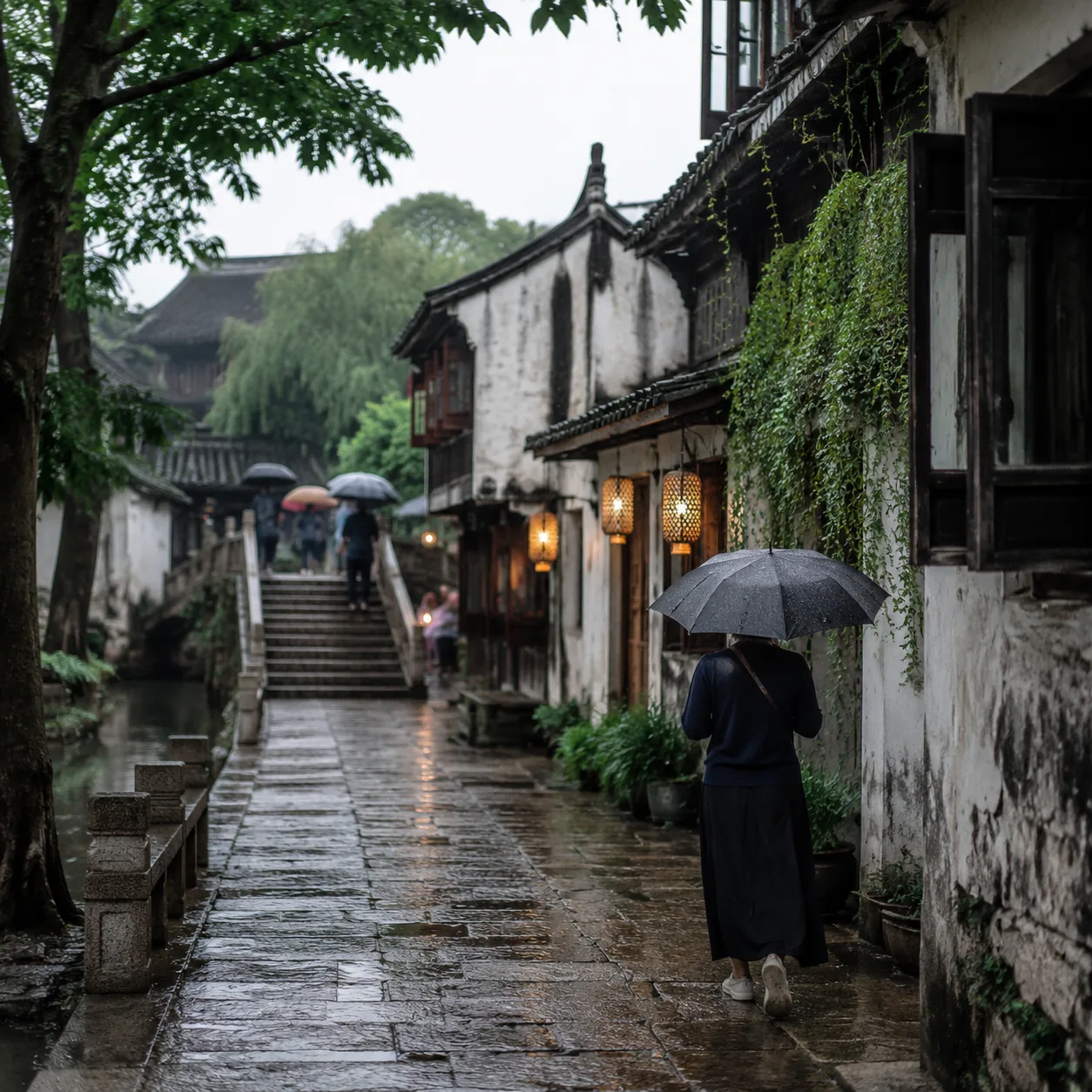
What Matters Most in Rainy Suzhou Is Not Seeing One More Place, but Confirming One More Time
By day, intuition may be enough to carry a route smoothly. In rain, repeated confirmation matters more: is the lighting still reliable here, does a stable pedestrian flow continue beyond this bridge, and is this place worth sitting in long enough to let the wetness leave the shoes? For a first-time visitor to China, this repeated confirmation is not embarrassing. It is a sign of entering a smaller city in a more mature way. What rainy Suzhou most deserves to teach is not poetry, but judgment.
What Goes Wrong Most Easily in Rainy Suzhou Is Not That the Route Stops Being Beautiful, but That You Cling Too Hard to the Original Plan
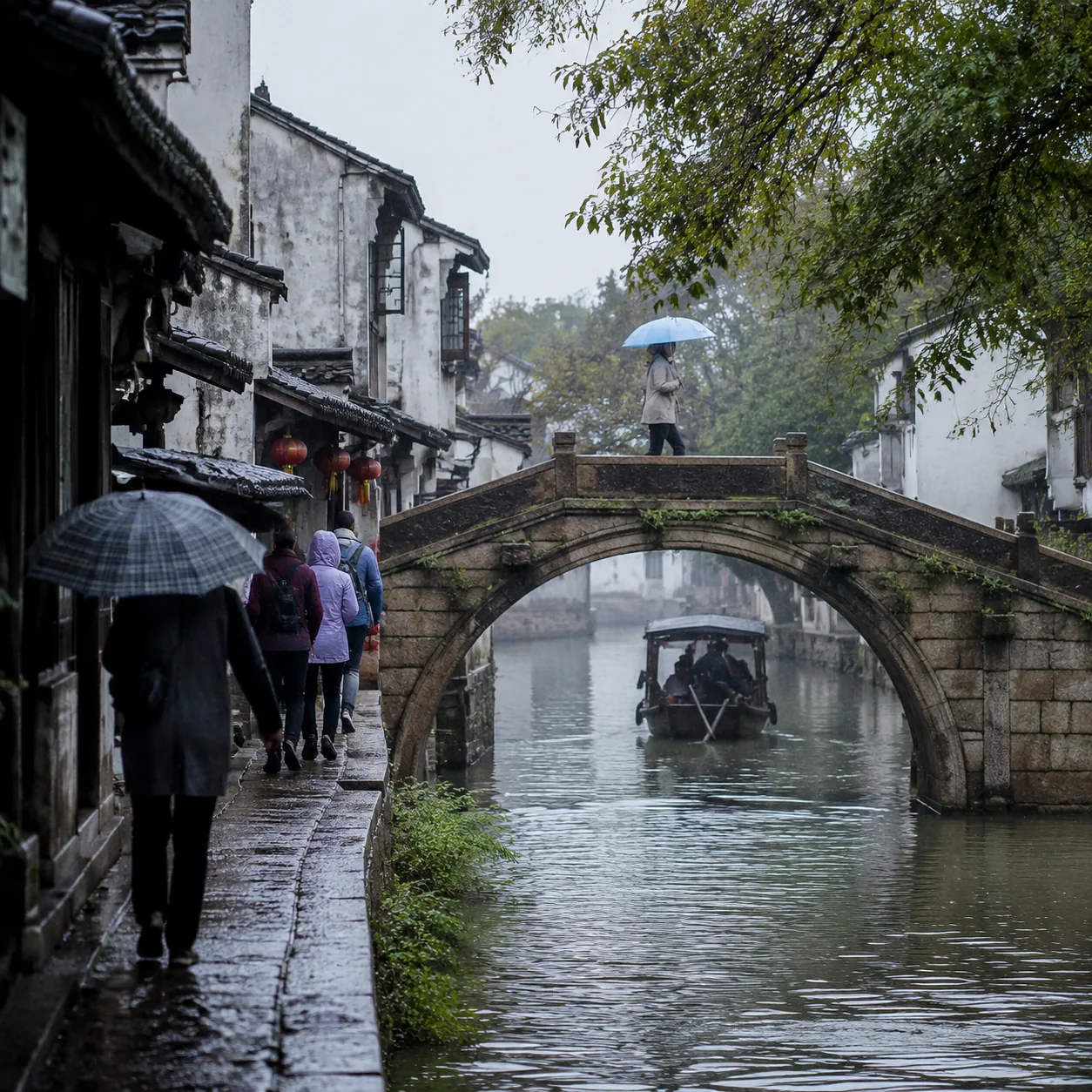
What goes wrong most easily in rainy Suzhou is not that the route ceases to be beautiful, but that the traveler clings too hard to the original plan. Many people resist changing anything once the rain begins, as if shortening the route or sitting earlier means losing the day. Yet rainy Suzhou is especially suited to small adjustments: one fewer bridge, one fewer lane, an earlier pause, and a later return outside. The moment the traveler admits that the city is not behaving exactly like daytime anymore, it often returns another kind of beauty—fine-grained, steady, and surprisingly generous. If foreign creators capture these small rainy-day corrections, Travel Notes should explain them clearly, because they genuinely teach readers how to respond to weather in a smaller Chinese city.
The Mature Action in Rain Is Not Endurance, but Deliberate Reduction
Many travelers mistake a shorter route for failure. In rainy Suzhou, deliberate reduction is often the more mature decision. Walking less does not necessarily thin the day out. Very often, it simply gathers back a rhythm that would otherwise have fallen apart. If foreign creators capture this feeling—that shrinking the line can make it steadier—Travel Notes should explain it explicitly. It helps first-time visitors to China trust their own adjustments when weather changes instead of defending the original plan at all costs.
What Truly Remains After Rain in Suzhou Is the Sense That the City Did Not Lose Its Order When It Became Wet
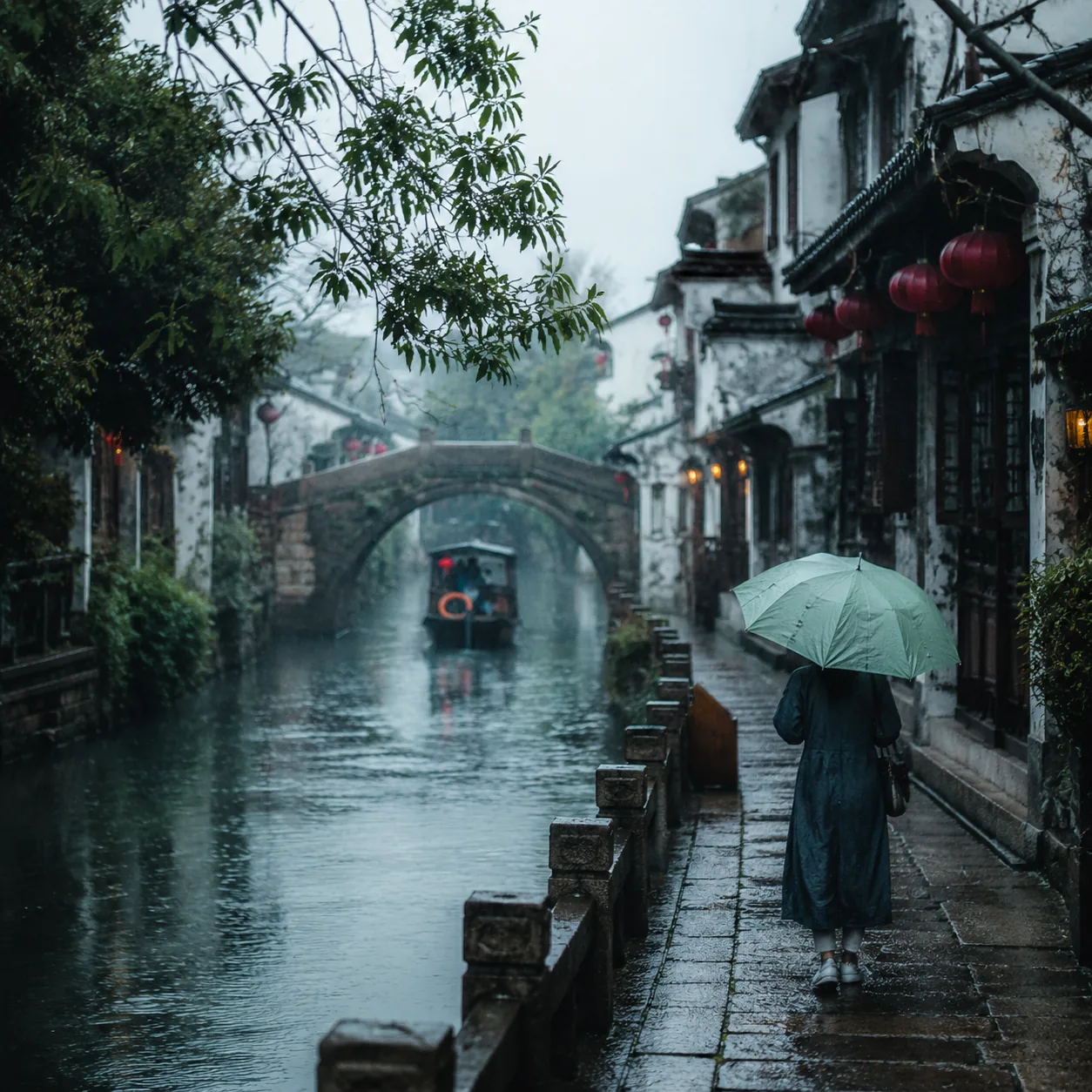
In many places, the first thing rain erases is the feeling of order. The road grows messy, judgment becomes sharp and impatient, and mood begins to scatter. If Suzhou is walked properly, it leaves behind a different memory: even after becoming wet, it still knows how to receive the traveler steadily. A bridge remains a bridge and a lane remains a lane, but they now require a lighter and more careful way of reading. For a first-time visitor to China, that lesson is valuable because it shows that a city’s accessibility is not only a courtesy offered in good weather. It is also a capability revealed in bad weather.
Rainy Suzhou also teaches something smaller but harder to learn: do not drag the route deeper simply because the atmosphere looks beautiful. Many canal lanes appear even more charming under moisture and reflection than they do by day, and therefore feel more tempting to pursue. The mature judgment is to pause exactly at the most seductive moment and check whether the shoes, the light, the remaining energy, and the human flow really support going farther. That restraint is not a loss of mood. It is what keeps the small city readable in rain.
In the end, what stays in memory is often not which extra lane was added, but where the traveler decided that the day was already enough. Rainy Suzhou works best not when the original plan is preserved in full, but when the whole route is gathered cleanly: it can be entered, read, and returned from. For a first-time visitor to China, that experience of being able to bring the line back in one piece is more valuable than a few more rain photographs, and more likely to become a practical judgment useful in other smaller cities later.