When the Sun Sets, the Real Show Begins — China's Night Economy
Have you noticed that Chinese cities by day and by night are practically two different species? Daytime means office towers, subways, hurried faces. But around six or seven in the evening, the streets transform as if by spell — neon flickers on, smoke rises from grills, crowds emerge from underground, and the whole city switches to a different channel.
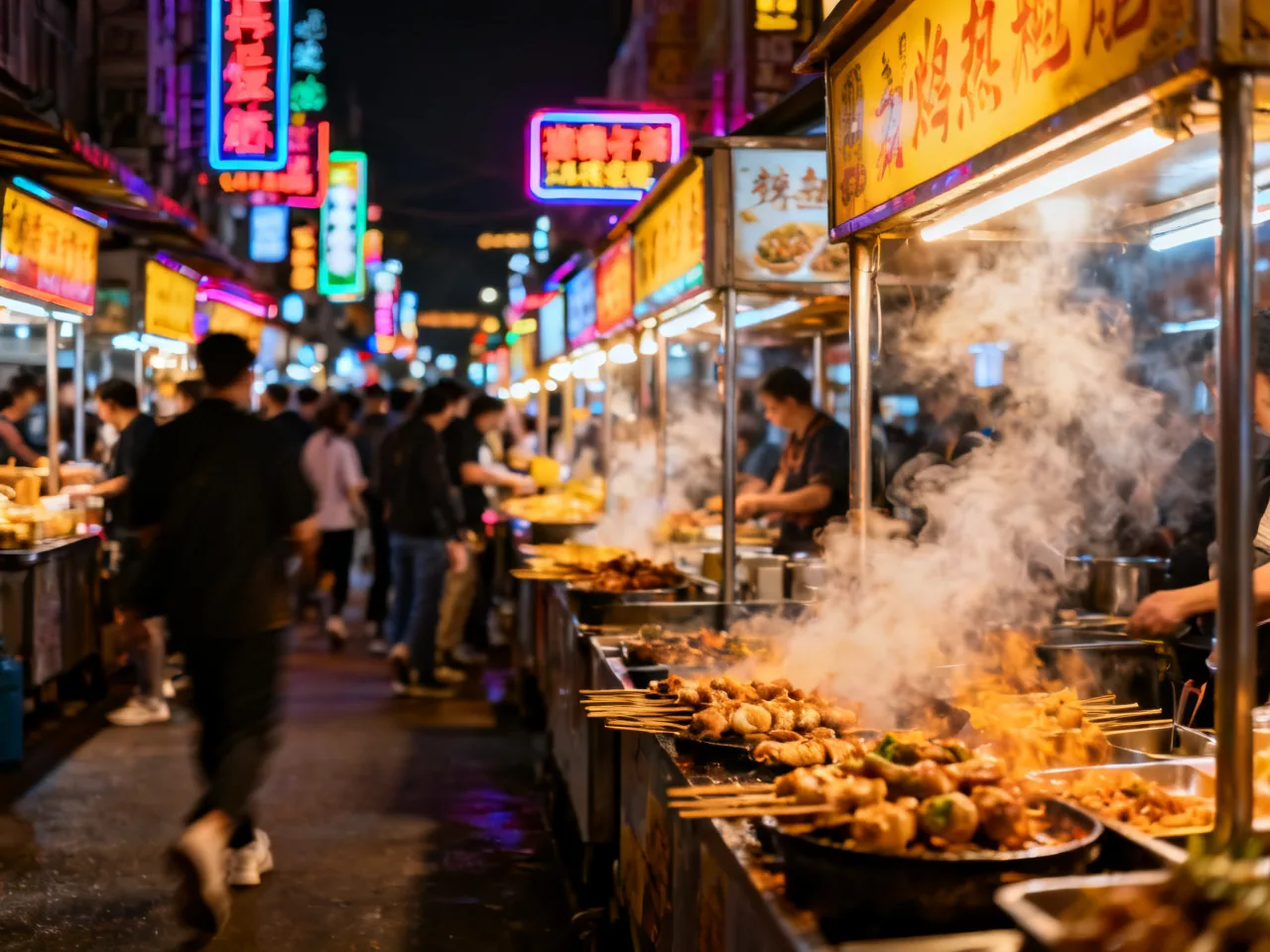
When it comes to Chinese nightlife, night markets are unavoidable. But let’s skip the spots every travel guide has beaten to death and talk about something real. Changsha’s Yangfan Night Market doesn’t peak until after 9 PM — twenty-plus people queue at the stinky tofu stall, the sweet aroma of sugar oil baba mingles with cumin from kebab grills, and the air itself turns thick. Vendors holler over each other, each louder than the last, like a competition. In 2024, Changsha’s nighttime spending accounted for over 60% of the city’s total retail consumption — a figure ranking in the national top three.
Xi’an’s night markets paint a different picture. The lanterns on Muslim Quarter look especially gorgeous at night, but locals prefer Sajin Bridge and Dapi Yuan. The lamb broth for paomo has been simmering all day and reaches peak flavor by nightfall. One bowl warms you from stomach to toes.
Chongqing’s Hongya Cave needs no introduction — at night it looks like a real-life Spirited Away set, drawing tens of thousands of visitors daily. But what’s even more impressive is the wave of immersive night-tour projects popping up everywhere. Hangzhou’s “Impression West Lake” show, directed by Zhang Yimou, uses the lake surface as its stage, with lights painting the entire Legend of the White Snake across the water. Tickets range from 280 to 680 RMB, and peak-season shows sell out consistently.
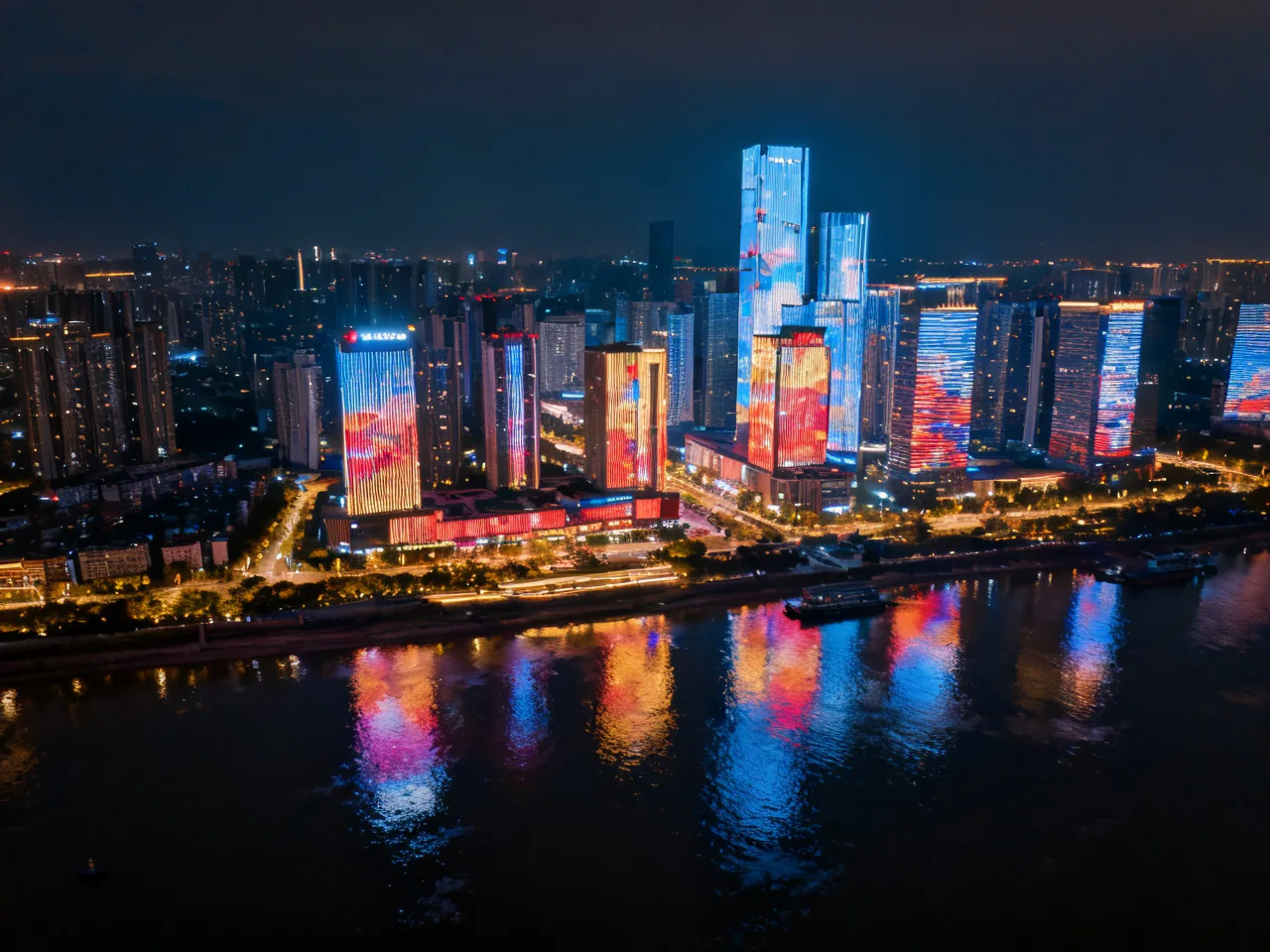
Wuhan’s Yangtze River light show is a free urban spectacle. Every evening from 7:30 to 9:30, building facades along 25 kilometers of both banks synchronize animated displays, themes rotating with holidays. During National Day, the “I Love You China” theme turns the entire river surface red, bright enough to make out faces on the opposite bank. According to Wuhan’s Bureau of Culture and Tourism, the light show has drawn over 80 million cumulative viewers since its 2017 launch.
China’s “midnight diners” aren’t the quiet little joints from Japanese dramas — they’re so lively you’d wonder if these people have work tomorrow. Beijing’s Gui Street crayfish row still has queues at 1 AM. Chengdu’s Yulin Road keeps hotpot restaurants open until 4 AM, the air saturated with beef tallow — if you love Chongqing hotpot, Chengdu’s late-night hotpot won’t disappoint either. Guangzhou’s dai pai dong take it further: some run 24 hours, with people doing dim sum at 3 AM — or should we call it “late tea”?
Behind all this buzz is real money. According to National Bureau of Statistics data, China’s night economy exceeded 50 trillion RMB in 2024, its share of GDP continuing to climb. Local governments are fanning the flames — Shanghai appointed “Nightlife CEOs,” Beijing designated “Night Capital” landmarks, and Chengdu selected “Night Economy Demonstration Sites.” This isn’t just eating, drinking, and entertainment; it’s a fundamental shift in how cities operate.
For travelers, this means one simple thing: don’t go back to the hotel too early. Chinese cities at night are at their most human. Last metro trains run between 10 and 11 PM, and ride-hailing is easy after that. If you’re planning a two-week China trip, make sure to give each city at least one full evening. You’ll find that China after dark is even more captivating than by day.