What Finally Made Suzhou Click for Me Was Never Seeing More Gardens but Getting the Sequence Right Once
Any city that depends strongly on sequence is naturally suited to retrospective writing. Suzhou is one of them. On a first entry, the traveler often assumes they are simply looking at classic Chinese elements that already carry their own meaning: gardens, canal lanes, bridges, white walls, corridors, and tree shadow. But after the route is actually finished, what remains in memory is often not the individual element, but the order in which those elements were arranged. What was seen first, what came later, when the body left the scenery to sit down, and when the eye returned to the water—these sequences shape whether Suzhou became legible far more deeply than any isolated attraction can.
That is why Suzhou resists being summarized well by a simple “ten must-sees” article. One can certainly list many places, but the real question is not whether they were seen. It is whether they were seen at the right moment. The same garden produces a different effect when placed at the opening of a day or at its end. The same canal lane becomes a different route when visited under the brightest light or after that brightness has softened. To review Suzhou is, in essence, to review sequence.
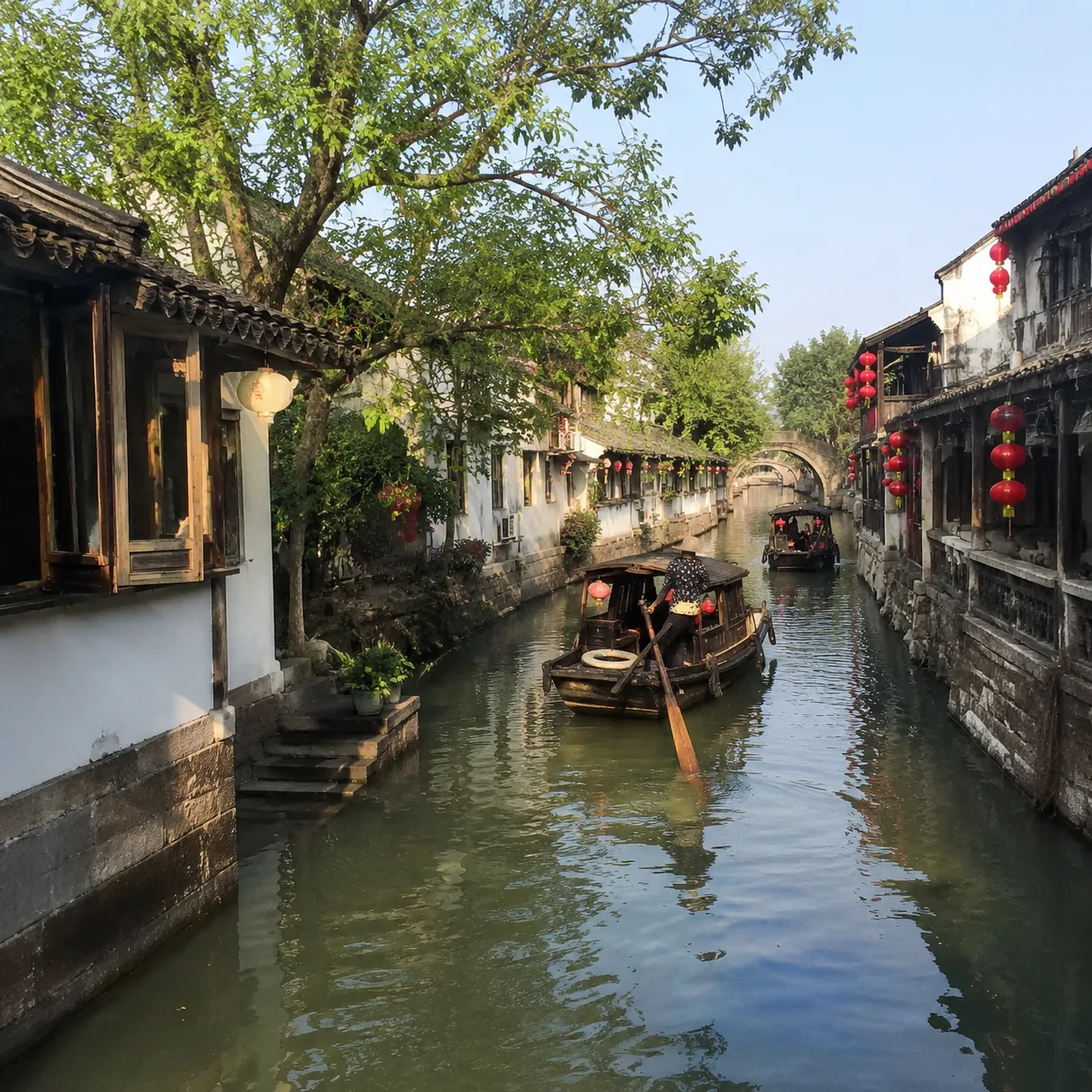
The Real Gain Often Begins Once You Understand What Deserves to Be Reduced
Many first-time visitors to Suzhou assume that because the city does not dominate through giant spectacle, the solution must be to schedule more—to collect a denser set of smaller elements in one sweep. Yet in retrospect, the opposite is often true. What makes Suzhou valuable is not that one sees more, but that one gradually understands where to reduce. One fewer garden, a few fewer bridges, one less pursuit of a canal lane that is already beautiful enough—these omissions often make the earlier impressions stand more clearly. For the reader, this experience of less but more accurate is far more durable than any label-driven recommendation.
To Review Suzhou Is Also to Review One’s Shift from Hunting Typical Images to Reading Rhythm
Suzhou rarely stops a traveler in one abrupt motion, so many people begin by searching instinctively for typicity: the bridge that looks most like Suzhou, the wall that looks most like Suzhou, the garden angle that feels most classically correct. But once a route is actually completed, one slowly discovers that what remains in memory is not the most typical point, but the rhythm. Which stretch of walking felt exact, which pause landed at the right moment, and which later view became clearer precisely because there had been time to sit. That shift proves something important: Suzhou does not overpower the traveler through scenery. It alters the traveler through rhythm.
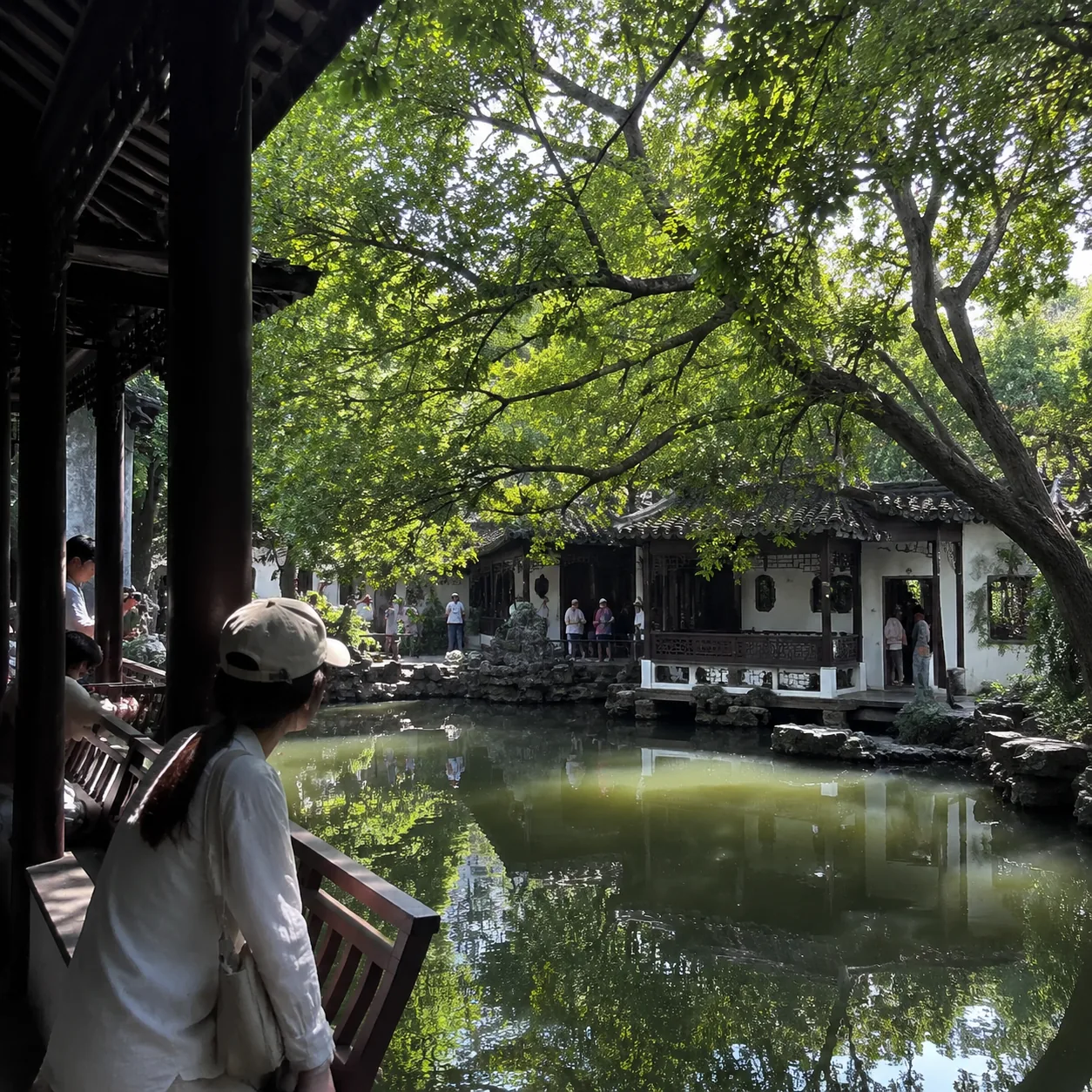
When Reviewing a Smaller City, What Matters Most Is Not Only What Was Done, but When the Eye Began to Learn
When people review cities, they often prefer to list actions: where they went, what they ate, and what they photographed. Yet in a smaller city like Suzhou, what deserves memory more deeply is often one subtle turning point. It may be the first time one did not rush across a bridge, but paused at its head. It may be the moment after leaving a garden when the traveler did not hurry to the next attraction, but allowed the previous corridor to remain in the mind for another ten minutes. These understated shifts are what turn “I have been there” into “I have begun to see.” For Travel Notes, that transformation is worth writing more deeply than any route list.
In Reviewing Suzhou, It Matters Most to Notice Which Moment First Made You Stop Rushing
Many route reviews focus on what was seen, eaten, or ridden. In Suzhou, what is more worth remembering is often the point at which rushing first became unnecessary. It may be the moment after leaving a garden when the traveler did not immediately speed up. It may be one small bridgehead breeze that made the whole day feel complete enough already. These moments seem minor, but they mark the shift from task completion to actual entry.
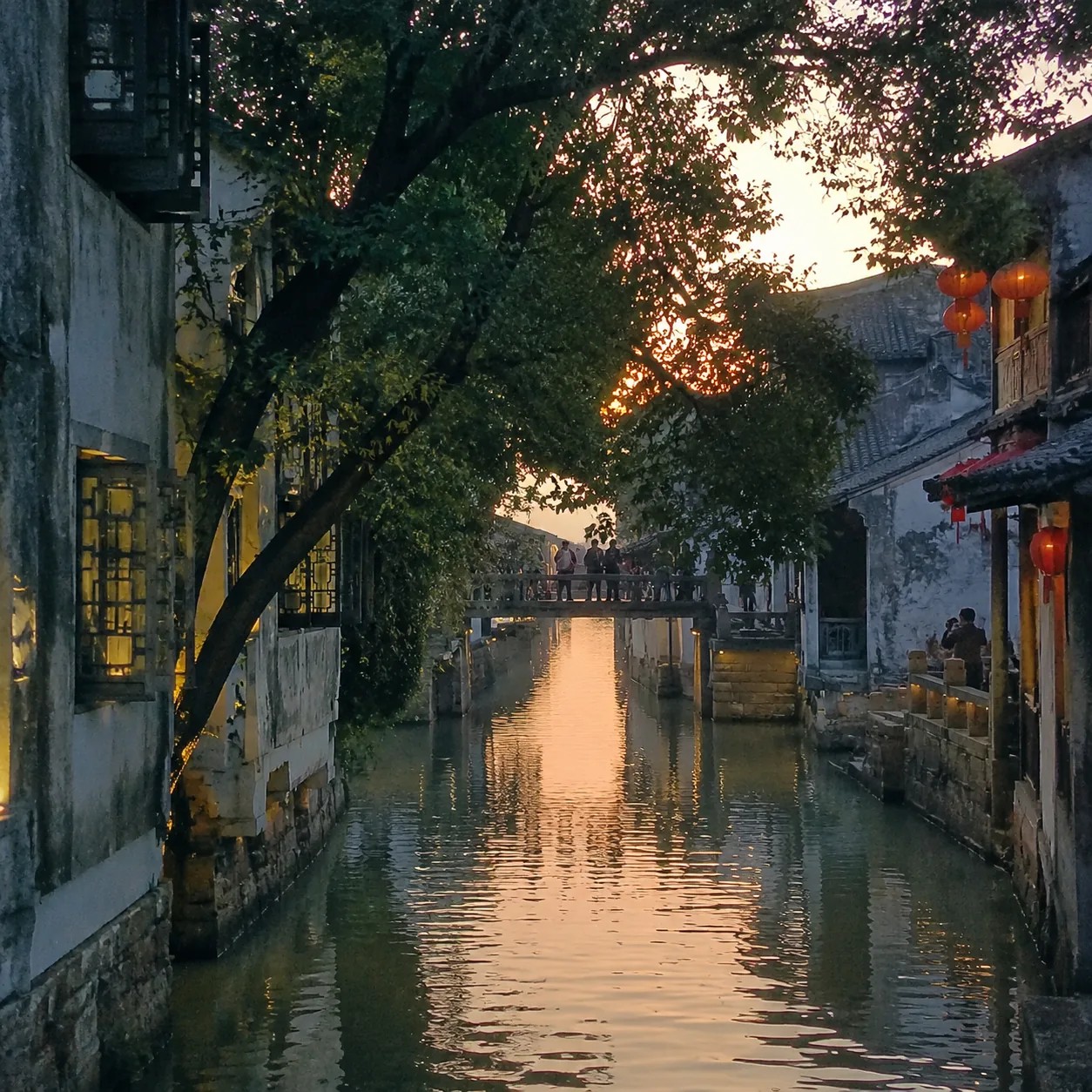
What People Most Easily Misunderstand About Suzhou Is the Assumption That Small Means Easy to Arrange Casually
Smaller cities often lower a traveler’s guard because every segment seems short and every stop seems light. But Suzhou’s issue is not distance. It is how easily nearby elements can wash one another out. If gardens, canal lanes, bridges, and meals are pressed too tightly together, the result is not richness but blur. A good retrospective can write that blur in reverse and show which reductions actually made the city feel more complete.
What a Retrospective Should Leave Behind in the End Is Not a List, but a Sense of Sequence
If a reader finishes a Suzhou retrospective and remembers only several place names, then the review still has not gone far enough. The better result is that the reader begins to understand that slowing down first and then seeing is not the same route as seeing everything first and slowing down later. A valuable retrospective on Suzhou does not merely decide which place is prettiest. It leaves behind a sense of sequence.