From Grey Concrete to Green Canopies: Two Decades of Urban Road Greening in China
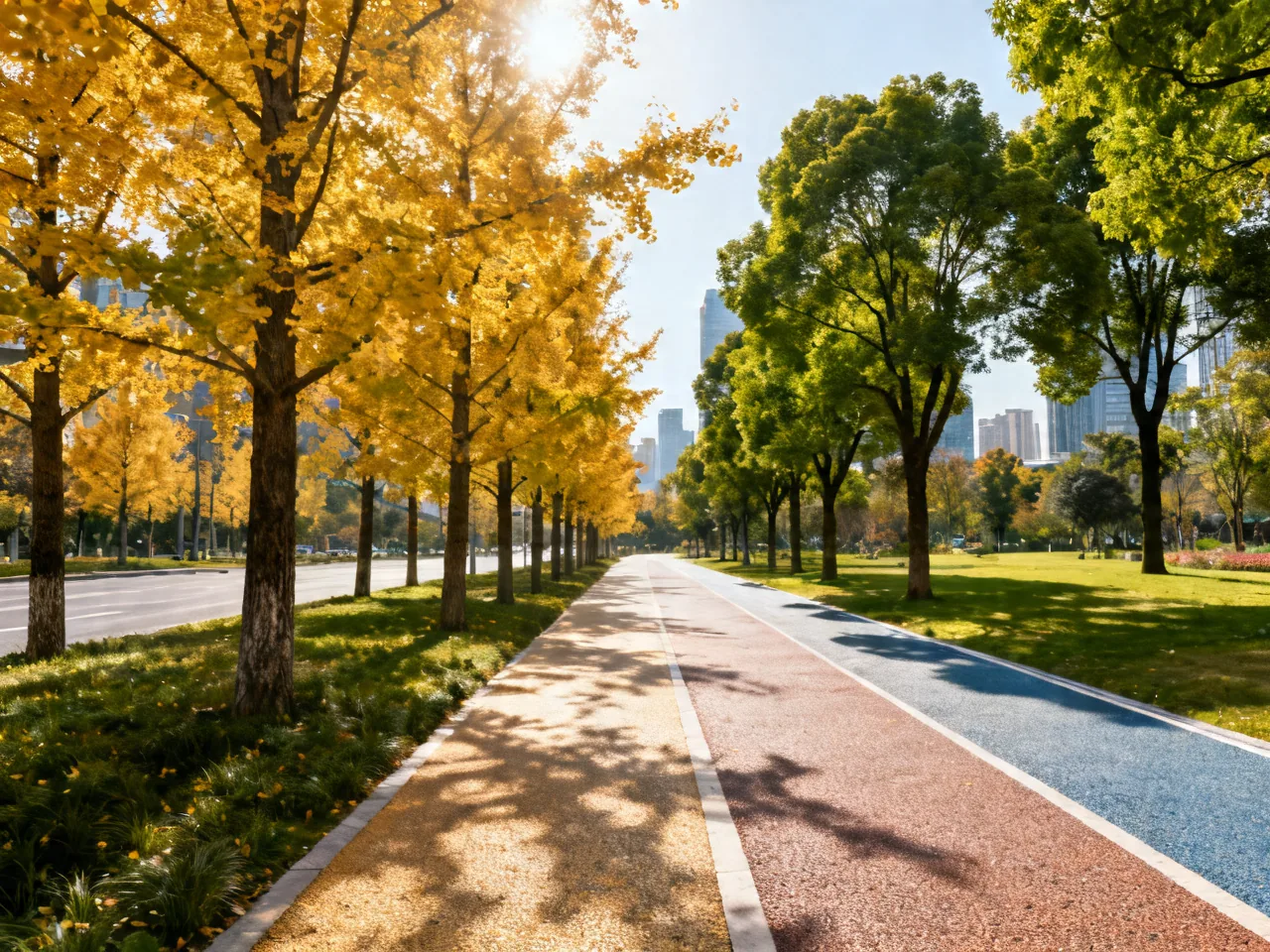
Walking along Jiaozi Avenue in Chengdu, you’re sheltered under a golden-green canopy woven by ginkgos and camphor trees. Beneath your feet lies permeable paving; between the cycling lane and the motorway stand two rows of plane trees. It’s hard to imagine that twenty years ago, this road was nothing but bare grey asphalt without a single decent street tree. This isn’t an isolated case — it’s a microcosm of how Chinese cities have transformed.
The Green Revolution Behind the Numbers
According to the Ministry of Housing and Urban-Rural Development, China’s urban built-up area green coverage rate was only 31.15% in 2003, with per-capita park green space under 6 square meters. By 2023, these figures climbed to 42.69% and 15.29 square meters respectively. The national urban road greening rate rose from under 70% to over 95%. Shenzhen, which started as barren land “outside the checkpoint,” now boasts over 1,200 kilometers of tree-lined roads and a 45.1% green coverage rate — leading among first-tier cities.
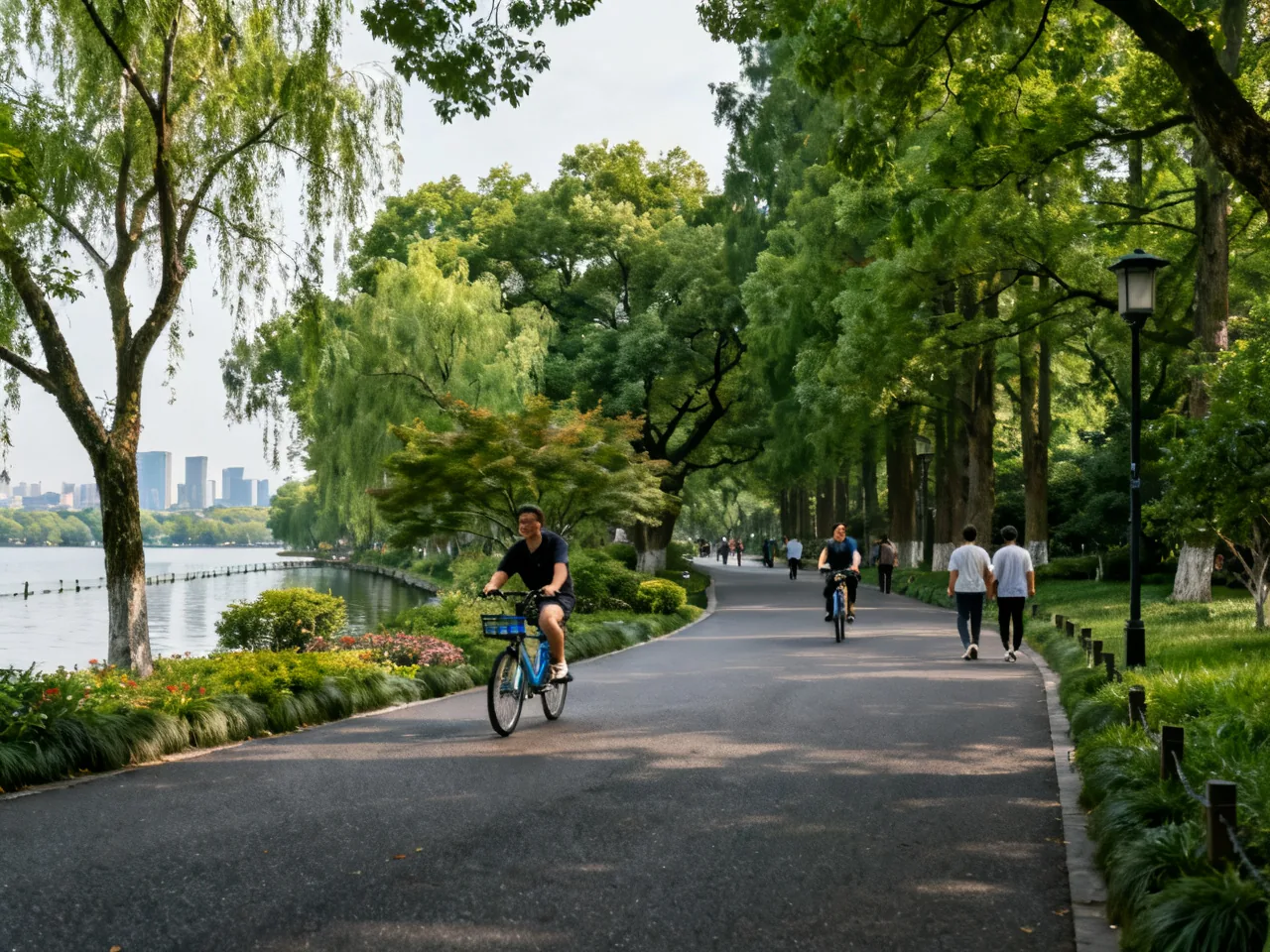
Hangzhou’s transformation is equally striking. Along Yanggong Causeway in the West Lake district, the dawn redwoods transplanted years ago now tower nearly twenty meters, forming a natural green tunnel. Every autumn, photos of their crimson foliage flood social media, making this road a city icon rivaling West Lake itself. On the south bank of the Qiantang River in Binjiang District, new roads are required from the planning stage to achieve at least 60% tree canopy coverage — a standard utterly unimaginable before 2005.
Sponge Cities: It’s More Than Just Planting Trees
China’s urban greening has long moved beyond the rudimentary stage of “planting a row of trees along the road.” The Sponge City pilot program launched in 2015 deeply integrates road greening with urban water cycle systems. Take Qingshan District in Wuhan: the renovated Heping Avenue uses sunken green belt design where tree planting pits connect to rain gardens. During storms, surface runoff first flows into green belts for natural filtration and infiltration, then enters municipal pipes through overflow outlets. Field data shows this design achieves a 78% annual runoff volume control rate — far exceeding the roughly 30% of conventional roads.
Chengdu proposed its “Park City” concept in 2018, planning the entire city as one grand park. The Tianfu Greenway system stretches over 5,000 kilometers, connecting virtually all road green belts, community parks, and suburban wetlands. Walking along the Jincheng Greenway, you’ll notice the tree species are meticulously selected — tall golden rain trees for shade on top, flowering crape myrtles for color in the middle, and evergreen sasanqua camellias for winter interest below. This three-tier “tree-shrub-groundcover” configuration has become the standard practice for road greening nationwide.
Street Trees at “China Speed” — And the Rethinking
The speed is indeed staggering. A newly built urban arterial road in China typically goes from groundbreaking to shaded canopy in just three to five years — because large-caliber transplant stock with trunk diameters over 15 cm is widely used. In contrast, European cities usually plant young trees of 6-8 cm diameter and wait fifteen to twenty years for canopy effect. This “instant greening” strategy rapidly improves cityscapes but has sparked debate: survival rates of transplanted large trees, ecological damage to source regions, and surging maintenance costs.
In recent years, more cities are rethinking this approach. Shenzhen’s 2020 updated road greening guidelines explicitly encourage native species and appropriately sized nursery stock, reducing the practice of “moving big trees into cities.” Guangzhou has begun prioritizing protection of existing street trees in old urban areas — those small-leaf banyans that have grown for half a century on old Guangzhou streets are not just greening contributors but carriers of generations of neighborhood memories. Around Dongshan Kou, banyan aerial roots draping into arcade corridors create a unique subtropical cityscape, now protected as heritage trees.
The Urban Green Corridors of Tomorrow
Looking back from 2025, China’s urban road greening has completed the full journey from nothing to something, from adequate to excellent. The next phase revolves around “resilience” and “ecosystem services” — street trees are no longer mere urban decoration but must genuinely deliver cooling, carbon sequestration, water retention, and biodiversity functions. Beijing’s ongoing “Cool Streets” initiative aims to reduce summer sidewalk surface temperatures by 5-8°C through optimized tree canopy design. Shanghai’s Outer Ring Green Belt has evolved from a simple shelter forest into a 500-meter-wide urban ecological corridor, with recorded bird species increasing from 47 a decade ago to 156 today.
China’s urban greening story is far from over. Next time you walk along a tree-lined boulevard in any Chinese city, look up at the canopy shielding you from the blazing sun, and think about that grey, dusty sky of twenty years ago — you’ll truly feel the weight of this green transformation.
Data sources: Statistical Yearbook of Urban Construction (MoHURD), public reports from municipal parks and greening bureaus