The First Lesson I Learned Buying Skewers at a Chinese Night Market Was to Control My Hand Before Chasing the Busiest Stall
The first time I bought barbecue skewers at a Chinese night market, it was late on a summer evening. The sky was already fully dark, and the stall lights made the thin layer of oily smoke over the roadside glow. The wind carried cumin, chili powder, charcoal, and the sweet smell of sauce all mixed together. Plastic stools sat unevenly along the curb. Beer bottles knocked against tables, children slapped the ground with their sandals as they ran past, and stall owners flipped skewers while shouting that an order was ready. Everything was crowded into the same stretch of street. I had only been in China a short time then, and I carried a very typical outsider excitement about night markets: if a stall had a lot of people, a lot of smoke, and a lot of noise, I assumed it must be the one worth rushing toward.
That night I almost made a very direct mistake: before thinking clearly about how much two people could actually eat, I grabbed a small metal basket at the busiest stall and started loading anything that looked appealing. Lamb skewers, chicken wings, grilled eggplant, tofu skin, enoki mushrooms, cartilage, toasted bread slices—I kept picking faster and faster, breathing in the smell and thinking only, “Since I’m here, I should try more.” The freezer doors at the stall kept opening and closing. Flames jumped up when fat dripped onto the grill. At the table beside us, several people were dropping cooked skewers onto a plate by the handful, which made it even easier for me to lose perspective. Just as my basket was getting too full, the owner looked up and asked with a grin, “How many people are eating?” I said, “Two.” He answered immediately, “Take less first. You can always add more. The worst thing at a night market is grabbing too much at the start.” It felt like cold water, not because it killed the excitement, but because it pulled me out of excitement and back into reality.
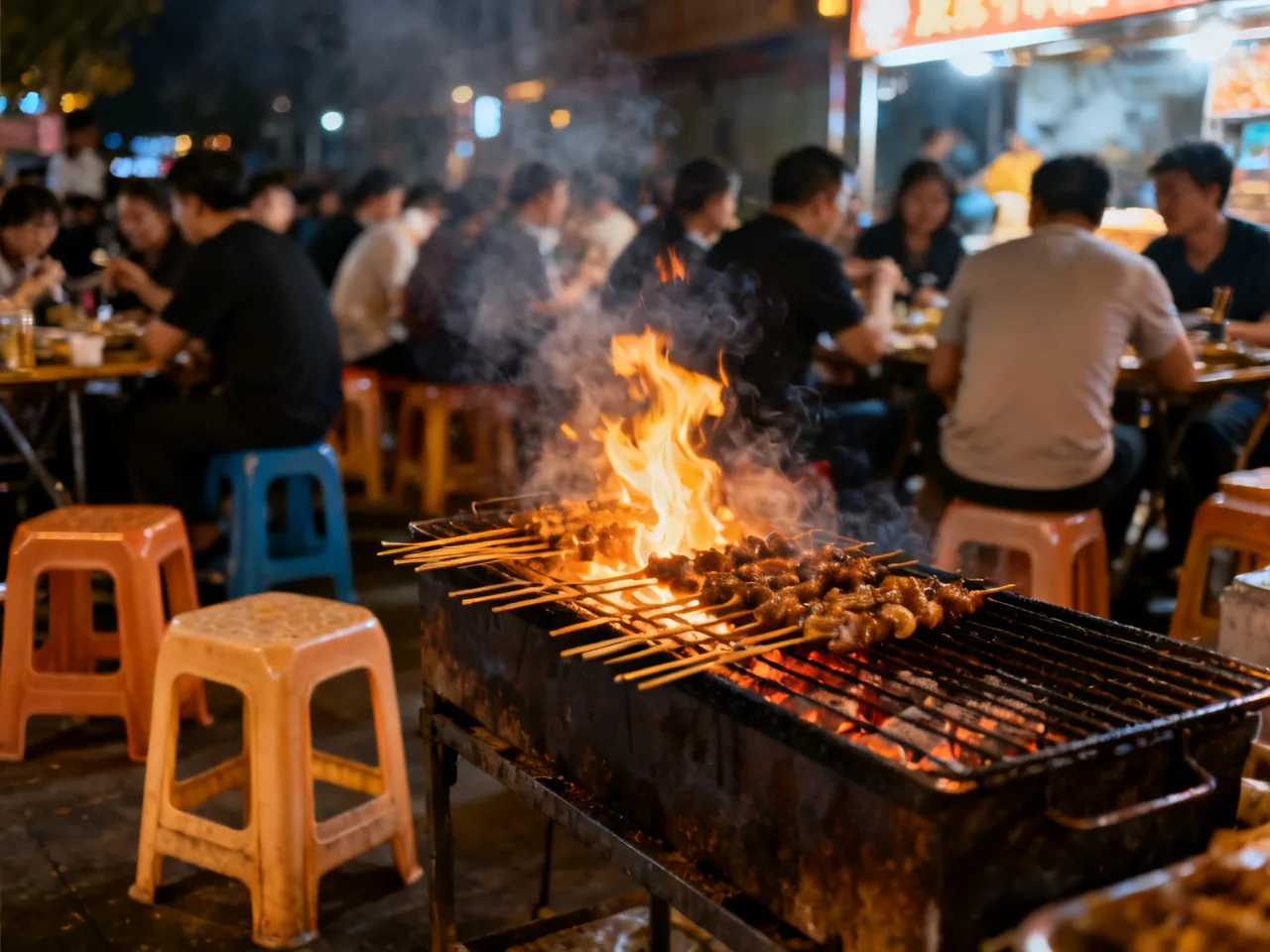
Later I understood that the liveliness of a Chinese night market is not there to push you into losing control. It tests whether you can keep your judgment inside the noise. People who truly know what they are doing rarely fill the basket at once. They first watch the pace of the grill, noticing which kinds of skewers turn over quickly and which take longer. They check whether the people they are with want more meat or more vegetables. And if the stall is especially busy, they often begin with dependable basics that let them judge the flavor of the place—lamb skewers, tofu skin, garlic chives, grilled bread slices—before deciding whether to add larger items in a second round. That kind of restraint does not kill the fun at all. It feels more like a mature way of taking part. You are not being dragged by the night market. You are finding your own rhythm inside the smoke and noise.
That owner also showed me a very Chinese, very practical ordering logic. He removed a few of the most filling items from my basket and said that for two people coming the first time, the goal is to “taste a bit of everything without getting so full you can barely walk afterward.” He explained that a night market is different from sitting in a restaurant. The key is not placing a perfect order at once, but adjusting while you eat. You can start with a dozen or so skewers, sit down, listen to what nearby tables are ordering, and notice which dishes seem to get reordered everywhere. If one flavor really suits you, you grab more in the second round, and the stall owner can grill it fresh with better timing. That was when I realized the real charm of a night market is not simply variety. It is the permission to participate through constant adjustment. You are not making one perfect order. You are making a series of small judgments.
Later, when I went to other night markets, I started paying attention to how the people who looked most experienced handled their choices. Some balanced meat and vegetables from the start so the whole plate would not become too heavy. Some asked whether the spice level could be separated to suit the people they were with. Some were obviously hungry, yet still limited the first round to one grilled eggplant, a few meat skewers, and a staple to create a base while leaving room for more later. There was another detail I really liked: even though people crowded tightly around many stalls, those who truly knew the rhythm did not stand in front forever studying every option. They thought first, stepped forward, took what they wanted, and then cleared the space immediately. That felt similar to the rhythm I have since seen in many eating spaces across China—fast does not mean frantic, and lively does not have to mean chaotic.
Following the same way of reading a scene, [中国夜市和深夜城市节奏] and [中国街头美食里的判断方法] also reinforce this habit from other angles.
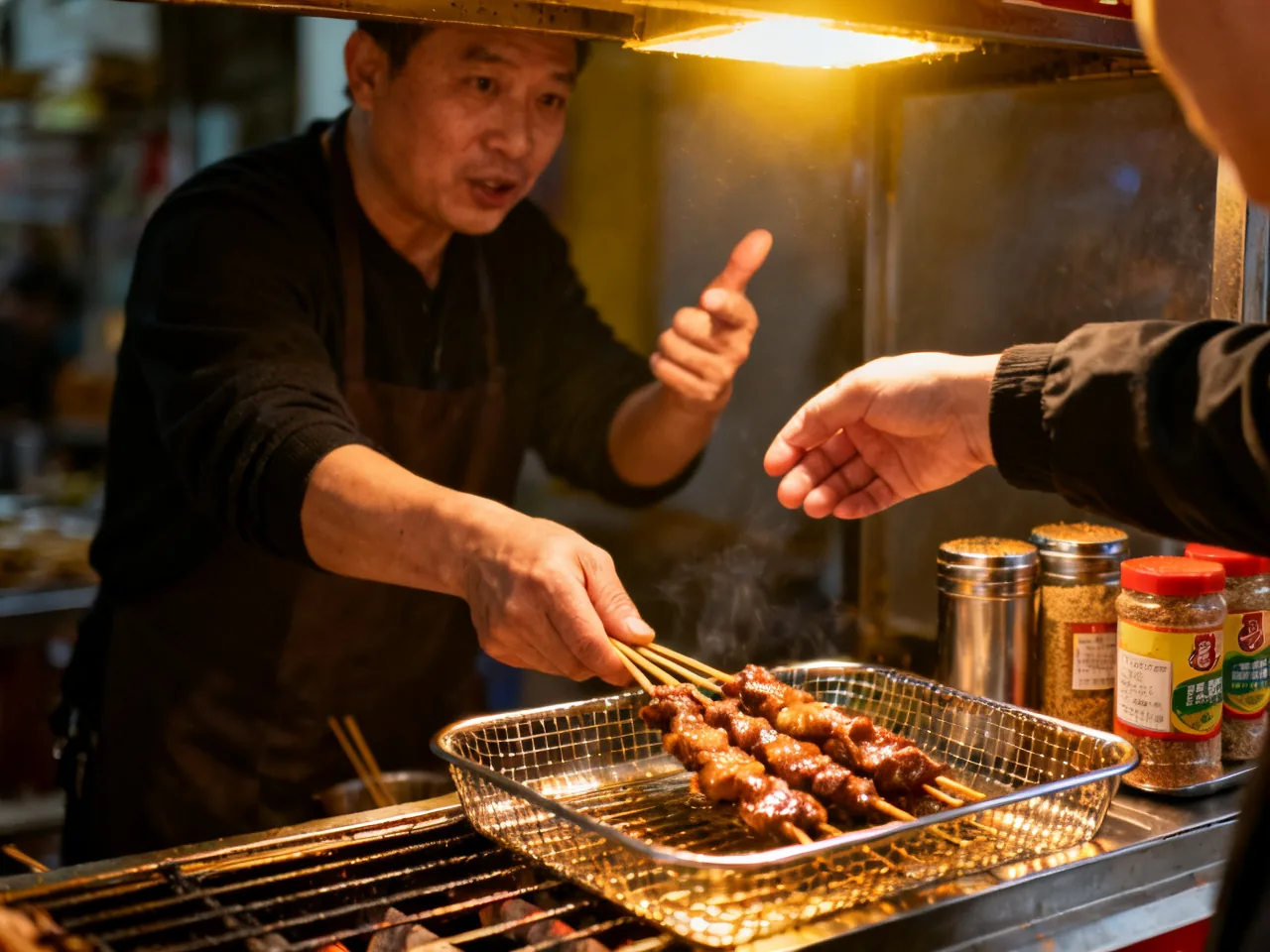
Now if a friend newly arrived in China asks me what the easiest mistake is when buying skewers at a night market, I always say this: do not let your hand move faster than your brain just because the atmosphere is great. First look at the rhythm of the stall. First think about how many people are eating, whether you can add more later, and which items are most worth trying first. Then begin picking. That approach does not reduce the fun at all. If anything, it makes you feel more like you are truly enjoying the night market instead of being overwhelmed by it. For me, the owner’s sentence that night—“Take less first. You can always add more.”—later became a useful reminder for life in China more broadly: in many of the liveliest settings, what makes you comfortable, well-fed, and better integrated is not grabbing fastest, but controlling your hand first and leaving yourself room for a second round of judgment.