The First Lesson I Learned at My Apartment Delivery Shelf Was Not to Put My Convenience in Other People’s Way
When I first moved into a youth apartment building in Shanghai, I thought picking up deliveries would be the most mechanical part of the day. My phone would show a notification that a package had arrived, I would go downstairs, give the last digits of my number, take the box, and return to my room to open it. The whole process seemed like it should be as simple as pressing an elevator button. But within a few days, I realized the delivery shelf on the first floor was actually one of the best places to observe urban social coordination. The lobby was not large. The reception desk stood to the right of the entrance, several rows of metal package shelves to the left, and a refrigerator in the back held fresh deliveries for temporary storage. On rainy days, shoe marks dulled the floor tiles into a gray haze. Every time the glass door opened, it pulled in traffic noise and humid early-summer air from outside. After seven in the evening, the space became especially busy, with delivery riders, couriers, residents returning from work, and people heading out to walk their dogs all crossing paths in that narrow entrance. It was there that I first understood something simple: picking up a parcel is not only about taking your own stuff. It is a small public collaboration built around not blocking, not creating mess, and not forcing others to take extra steps.
The first time I realized I was standing in the wrong place happened on a weekday evening. I went downstairs to collect a small cardboard parcel. After scanning the code, I casually set the box down beside the shelf and started opening it. I did not have scissors in my room, and I wanted to check whether it contained the charging cable I needed urgently. If it did, I would just take it upstairs immediately. At that moment, I genuinely did not think I was doing anything wrong. But within less than half a minute, someone was already dragging a suitcase through the entrance, another person was waiting with two grocery bags for me to move, and a delivery rider had to turn sideways to squeeze between me and my box. The woman at the reception desk did not scold me. She simply said in a light voice, “Move it first. People need to pass.” My face felt warm immediately, and I picked up the box at once. No one had been harsh. I had simply seen, all at once, that in a shared entrance, even occupying space for two minutes can cut off other people’s route.
After that, I started paying close attention to the area and noticed a whole set of default courtesies that were never written on the wall but were clearly being followed by everyone. The biggest mistake at the delivery shelf is not being slow. It is standing still while occupying the middle. People familiar with the place usually move in short, efficient sequences: enter, check the last digits on their phone, scan the shelves, take the package, and turn away immediately. If they have several parcels, they first carry them to a spot against the wall before reorganizing. If a box is too big, they drag it outside to a more open area before opening it. If someone is bent over searching for an item, the person behind usually shifts aside instead of standing too close, and they do not lean forward while urging them to hurry. What matters most is not some astonishing level of speed. It is that everyone tries to shape their own pause into something that interferes as little as possible with others.
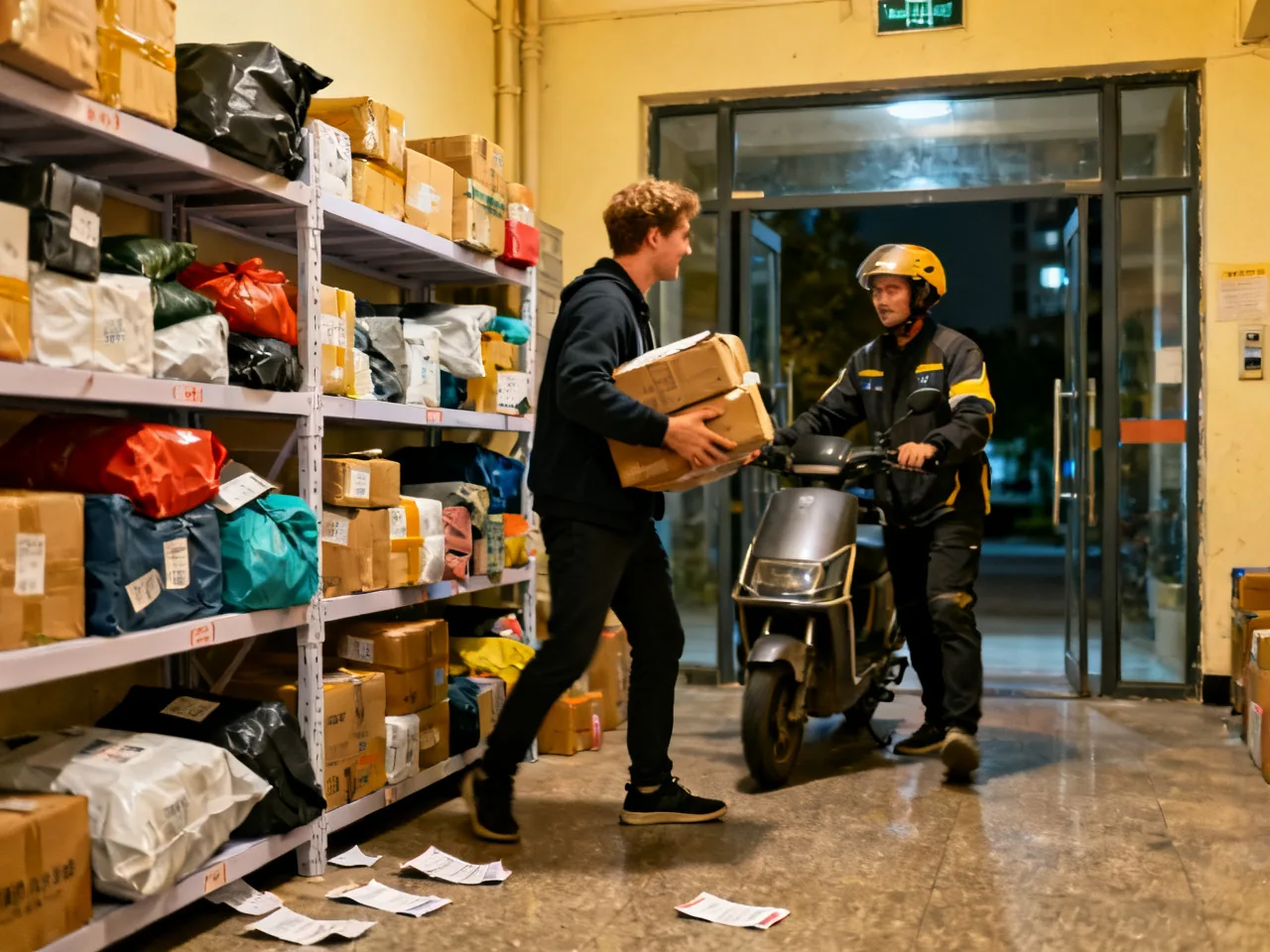
I gradually understood that an apartment delivery shelf is not like an ordinary store shelf, because what it holds is not just objects but different people’s timing. Some residents have just gotten off work, still carrying laptop bags, and only want to grab their parcels and go upstairs to cook. Some are on their way out and already have an umbrella and keys in hand. Some are waiting anxiously for chilled food and do not want it to warm up. Couriers need to drop off dozens of packages quickly and head to the next building. So “do not block others” is not an abstract moral slogan here. It is a very concrete form of consideration: do not leave your scooter helmet in front of the shelves, do not squat there for ages checking screenshots of tracking numbers, do not leave torn tape and plastic wrapping behind, and do not slowly reorganize your delivery details when people are obviously waiting behind you. Each small action helps determine whether this tiny space flows or clogs.
Once I saw a resident collect five or six packages at once, all online restocks, with boxes stacked high in their arms. Instead of standing there sorting out which one held detergent and which one held kitchen paper, they carried the whole pile to the bench in the corner of the lobby first, clearing the passage before checking each item. Another time, a young woman opened a parcel and found glass cups inside. Worried she might drop them, she moved to the steps outside and reorganized the foam wrapping there instead of scattering debris across the floor. The receptionist also occasionally reminded newly moved-in residents, “Take it away first, then check it. Otherwise it’s hard for others to get through.” These scenes are tiny, small enough to miss if you walk past quickly. But I have increasingly felt that whether a city is pleasant to live in is often hidden in precisely this kind of small order that nobody especially praises and nobody loudly complains about.
For foreigners, there is also an easy misunderstanding in places like this: assuming that if no one explicitly stops you, then anything is acceptable. But in many shared living spaces in China, what really keeps things working is not strict enforcement but a sensitivity to not making the next person’s task harder. The apartment delivery shelf makes this especially visible. If you lean your box against the exit, the person you block might be someone carrying a child. If you stand in the best-lit spot opening your package, you may be preventing an older resident behind you from reading the shelf numbers. If you stuff unwanted wrapping into an already overflowing trash can, the person who eventually deals with it may be the night-shift cleaner. These connections are not always explained out loud, but they are always there.
Later I made a few very simple rules for myself: take the parcel first, step away second, check it third; if I need to open it, do that somewhere that does not block passage; if I have multiple packages, move them to the side before counting; if a courier is in the middle of unloading many items, do not press in right behind him to search, because waiting ten seconds is often faster in the end. Strangely, once these habits formed, they did not feel inconvenient at all. They made the entire pickup process smoother. I no longer had to keep shifting because others were trying to get around me, and I was less likely to lose my place or my tracking screenshot in the confusion. Most importantly, I changed from someone thinking only “my package has arrived” into someone who instinctively checks, “am I in someone else’s way right now?” It is a small change, but it made me feel that I had truly started to enter the shared life of the building.
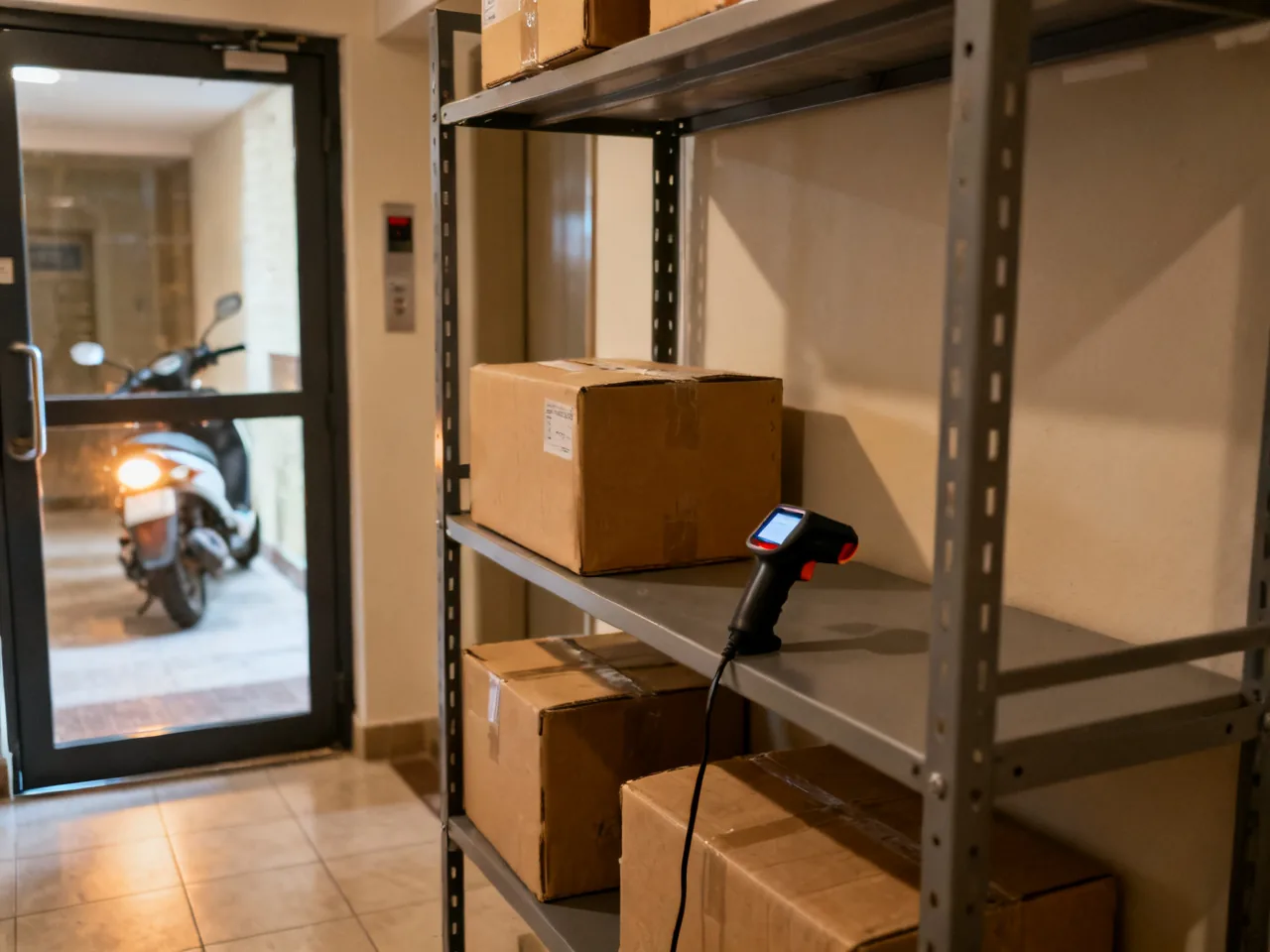
Now, if someone asks me what form of courtesy is easiest to overlook yet most worth learning in Chinese apartment life, I might say it is the small sideways step at the delivery shelf. Take your parcel out of the main path first. Delay the urge to open it for a few minutes. Leave convenience for the person who has not even come through the door yet. These things sound trivial, but they express a mature everyday instinct: not to preach grand principles all the time, but to know how to place yourself in crowded, limited, repetitive spaces without taking up more room than necessary. Every time I go downstairs in the evening to collect a package, hearing the beep of a scanner, the crackle of tape being pulled open, and the scooter horn outside the glass door, I think about how what I learned was not just a pickup technique. It was a plain and useful form of urban courtesy: my own life can continue smoothly, but ideally not by standing on someone else’s route.