One Home-Style Meal Taught Me Chinese Politeness: When to Accept Food and When Not to Refuse Too Fast
Lead
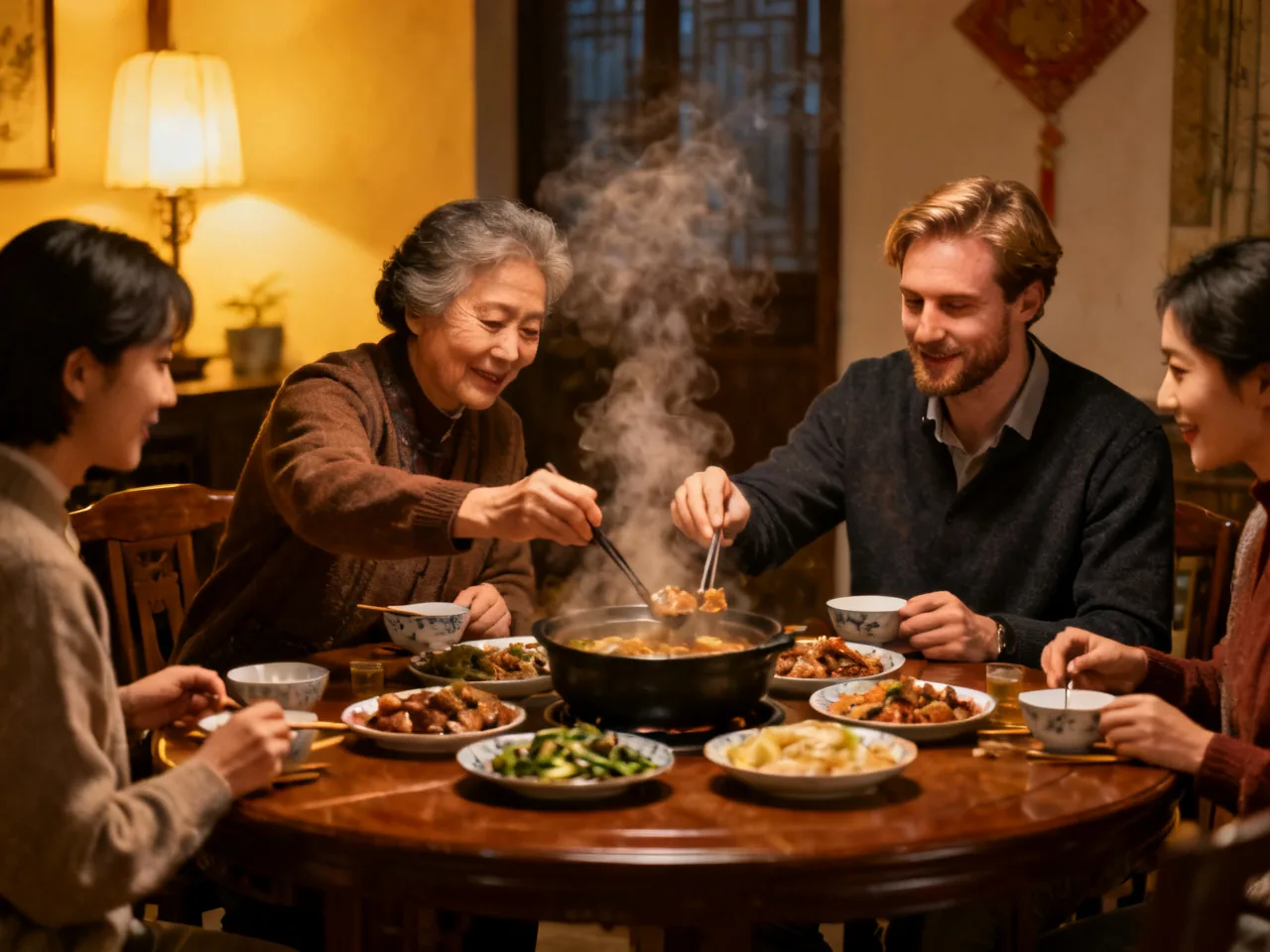
It was around 6:30 in the evening in Suzhou, and the round table in a family apartment had just been set. The kitchen door was half open. A clay pot was still bubbling. The scallions on top of the steamed fish had curled slightly under hot oil. Outside the window was a quiet residential road, with tree shadows resting against the glass. I had barely placed my bag on the back of the chair when the auntie of the family carried out the last vegetable dish from the kitchen and said with a smile, “Come, sit first, the dishes are almost all here.” Less than a minute after I sat down, she placed the tenderest piece of fish from the belly onto my rice bowl.
My first reaction was intensely foreign. I raised my hand immediately and said, “No, no, really, you don’t have to, please eat it yourself.” She paused for half a second. She was still smiling, but her movement stalled. My friend, who had brought me there, lowered his head to hide a laugh and whispered, “Just receive it first.” The moment lasted only a second, but it made me realize that I might have misunderstood an important signal at a Chinese table.
Many people assume Chinese warmth is only ritual politeness. Others think table manners in China are too complicated and full of traps. Over time, I came to believe the truth is much less dramatic. There is rhythm at a Chinese table, yes, but it is not an exam. You are not meant to mechanically recite rules. It is more like a relationship unfolding in real time: one person expresses care, another responds with some flexibility; someone offers warmth, and you do not need to accept every bit of it, but you should not reflexively bounce the whole gesture back either.
That meal was the true beginning of my understanding of that rhythm.
Scene One: I Was Saying “No” Too Fast
When the auntie put fish into my bowl, my refusal was almost reflexive. In the culture I grew up in, accepting care too quickly can sometimes seem impolite, while mild refusal leaves room for the other person. But at that Suzhou family table, my “no, no” felt like I was blocking something that had been moving naturally.
Later, my friend explained it to me very simply: “She’s not pressuring you. She’s telling you first that you are a guest.” That sentence made everything click. The piece of fish was not just fish. It was a positioning move, a welcome ritual, a way of saying, “You are already included in this meal.”
By the second round, I had become a little wiser. When she asked, “Do you want to try the ribs?” I did not wave it away immediately. I gently moved my bowl forward and said, “Thank you, Auntie, I’ll try one piece.” She visibly relaxed and replied, “Yes, just try one first. If you like it, eat more.” Just like that, the atmosphere smoothed out.
The first table lesson I learned there was not “you must accept food placed into your bowl.” It was this: receive the goodwill first, then express your boundaries gradually.
Scene Two: Refusal Is Allowed at the Table, but It Needs Rhythm
What fascinates me most about Chinese tables is that many manners are not binary. It is not “accepting equals politeness” and “refusing equals rudeness.” How you accept, when you decline, and how strongly you decline together shape how others experience you.
That evening there was one dish I was not very brave about—a sweet-style freshwater fish preparation. I am generally cautious with bony fish, and the flavor profile was unfamiliar. I wanted to retreat. But this time I did not say, “I don’t eat this.” I took a small bite, tasted it seriously, and then said with a smile, “The flavor is very special. I’ll keep trying slowly—let me have more vegetables first.” That sentence turned out to be very useful. It did not embarrass the person who made the dish, and it still communicated my own pace.
The uncle at the table nodded and said, “No problem, take your time. Eat whichever you like.” At that moment I almost wanted to applaud myself. It was the first time I truly understood that boundaries and politeness are not enemies. You can absolutely have both.
This later helped me reinterpret the subtle interactions discussed in 中国人为什么这么在意面子. Very often, “face” is not fake performance. It is a way of making sure everyone can stand with dignity inside the relationship. You do not have to pretend to love something, but you can still offer the other person a graceful place to land.
Scene Three: A Conversation-Driven Table Was Gentler Than I Expected
Another surprise from that meal was that the conversation at the table was far less aggressively curious than I had feared. Many foreigners worry that being invited into someone’s home means facing a chain of intrusive questions: how much do you earn, why aren’t you married, are all people in your country like this? I cannot speak for every family, of course, but that Suzhou dinner felt much gentler.
The auntie’s first question was, “Were you tired on the way here today?” Only later did she move to how long I had been living in China, where I usually bought groceries, and whether I cooked. My friend filled in vocabulary when needed. When I spoke imprecisely, people just smiled without making me feel clumsy. When the uncle talked about the difference between life in Suzhou and Shanghai, he even slowed his pace deliberately, as if he knew I was trying to keep up with each sentence.
I suddenly realized that Chinese politeness is not only visible in obvious gestures like placing food in your bowl. It also appears in conversation—in giving you a step to stand on, giving you time, and avoiding public embarrassment. That gentleness is not always dramatic, but it is deeply practical.
How to Learn Table Manners: The Three Layers I Eventually Summarized
Layer One: Observe Who Is Setting the Rhythm
When elders, hosts, and first-time acquaintances are all present, someone is usually setting the table rhythm naturally: who begins eating first, who initiates the serving, who turns the lazy Susan, who most often urges you to eat more. Identify that center first, and you avoid many misunderstandings.
Layer Two: Accept a Small Amount First, Then Decide Whether to Continue
This is probably the most useful method I have found at Chinese tables. If someone gives you a piece of meat, a spoonful of soup, or a shrimp, you can first receive it, first taste it, and first say thank you. If it truly does not suit you, explain gently afterward.
Layer Three: When Refusing, Give a Reason Without Turning It Into Rejection of the Person
For example: “I’m already quite full today,” “The flavor is really interesting, let me go slowly,” or “My stomach is small, I can’t eat too much.” Compared with “No,” “No need,” or “I don’t eat that,” these phrases create far more softness.
How Safety and Personal Boundaries Can Coexist
Some foreign friends worry that once they accept table warmth, they will lose their boundaries. I used to think that too. But my experience now is that boundaries are not always built through immediate hardness. Very often they are built through steady, clear, and non-dramatic expression.
For example, later in the meal, the auntie offered to fill my soup bowl for the third time, and I genuinely could not drink more. I placed my hand lightly near the bowl and said, “Auntie, I’m really full now. It’s delicious, but if I drink more, I won’t be able to walk.” Everyone laughed, and she did not insist again. The key was not whether I said no. The key was that I had already created smoothness through earlier acceptance, trying, and thanking. So when I finally needed a clear boundary, it did not feel abrupt.
This matters a lot to me. I do not want to interpret Chinese politeness as “you must suppress yourself,” and I do not want to interpret foreign directness as “the only option is blunt resistance.” Mature cross-cultural dining means neither side becomes exaggerated: warmth remains visible, and authenticity remains intact.
What I Would Tell a Foreigner Going to a Chinese Home for Dinner for the First Time
If you are already nervous before the invitation, I have one especially practical suggestion: don’t arrive starving, but also don’t arrive so hungry that you lose all judgment. Many awkward cross-cultural dinner moments happen when someone is hungry, tired, and trying too hard to be polite at the same time. If you are too hungry, you may eat too fast. If you are too tired, you may fail to follow the conversation. If you are too focused on “doing everything right,” every move becomes stiff. Sitting down in a basically comfortable state is itself part of good manners.
Don’t Arrive Empty-Handed, but Don’t Make the Gift Too Heavy Either
Fruit, pastries, tea, or small snacks are all good choices. The point is to show thoughtfulness, not create pressure for the host.
Once Seated, Watch How Others Begin
Do elders begin first? Does the host invite everyone to start? Is there a lazy Susan to rotate? None of this is difficult, but it is worth watching one full round first.
The First Time Someone Serves You, Say Thank You First
Even if you only take a small bite, it creates far more smoothness than pushing it back instantly.
If You Truly Can’t Eat More, Use a Gentle Full Sentence
“Thank you, I’m already quite full,” “Let me pause for a bit first,” or “I’ve already tried this and really liked it, but I truly have enough for now.”
After the Meal, Compliment Something Specific
Don’t say only “it was delicious.” Say “the soup felt so comforting,” “the fish was very tender,” or “the vegetables were so fresh and light.” Specific praise carries more weight.
Ending: What I Learned Wasn’t a Complex Rulebook, but How to Let Goodwill Land
Later I ate in other Chinese homes too—different cities, different flavors, different family atmospheres—but the main thread I learned from that Suzhou dinner never changed: observe first, thank first, receive a little first, and then express yourself gradually. That thread has worked in almost every scene I’ve encountered. It stopped me from treating the Chinese dining table like a cultural exam and helped me see it instead as a form of life that people are willing to pull you into.
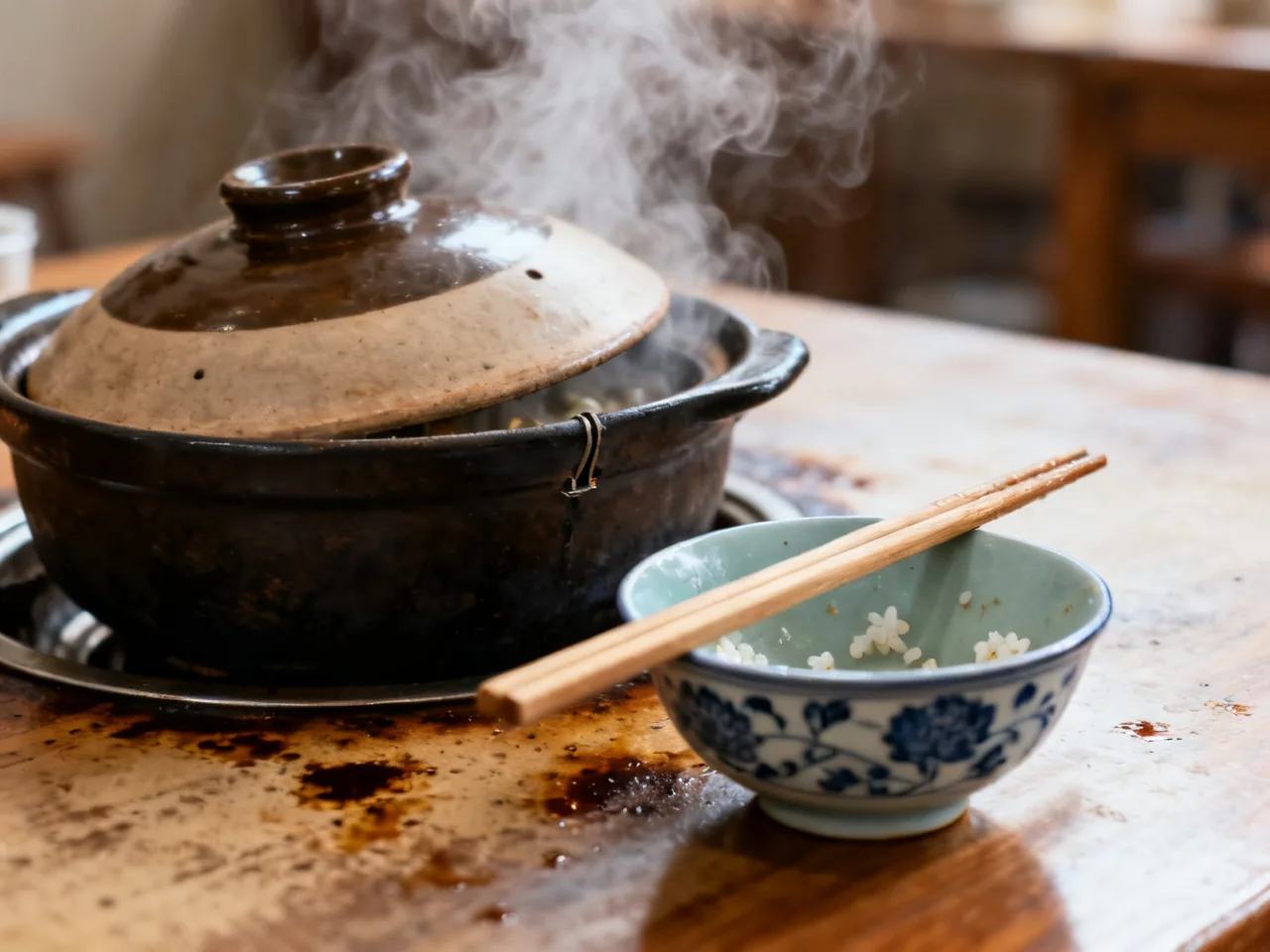
By the time that Suzhou family dinner ended, it was close to 9 p.m. Only a little broth remained at the bottom of the clay pot. A fruit plate had appeared. The uncle went to the balcony to fetch some drying floral tea. The auntie was still urging me to take a few pastries back with me. This time I did not rush to refuse. I smiled and said, “Then I’ll take a little and have it for breakfast tomorrow.” She nodded with clear satisfaction, as if something had finally settled into the right place.
On the way back, my friend asked, “How did it feel today?” I said, “I used to think politeness only meant not troubling other people. Today I understood that sometimes politeness also means not blocking someone’s care too quickly.” He replied, “Yes. That’s exactly it.”
After that, my understanding of Chinese table manners became much simpler. It no longer felt like a stressful list of taboos. It felt like breathing inside a relationship. When to receive, when to slow down, and when to state yourself clearly—these things can all be learned, and they do not require you to become someone else. You are simply learning another way to let goodwill land properly.
Later, whenever I think again about that piece of fish placed into my bowl, it feels like a small key. What it opened was not a memorized rule, but a gentler understanding: Chinese politeness often does not demand that you instantly say perfect things or make perfect gestures. It simply hopes that you do not shut the door too quickly. Sit down first. Taste one bite first. Notice why people are doing what they are doing. Many of the answers appear on their own.
If I phrase the lesson from that dinner even more simply, it would be this: don’t rush to mistake care for control, and don’t rush to mistake politeness for falseness. Very often they are simply a cushion at the beginning of a relationship. If you receive a little, the atmosphere relaxes. If you express yourself gradually, your boundaries are still respected. Understanding that layer is one reason I later grew to genuinely like eating at Chinese family tables.
In the end, what moves me most about table manners is not the rule itself, but the intention behind it: someone is willing to care for you, someone is willing to wait for you to adjust, and someone is willing to bring you slowly into the rhythm of the meal. That feeling of being gently received is one of the parts of life in China I treasure most.