In Chongqing, I Learned to Confirm My Floor First Before Deciding Which Way to Go
The first time Chongqing truly defeated my sense of direction was not on a mountain road, but in an evening scene where a mall, a metro station, and street-level routes were stacked together. My map clearly said the destination was only a few hundred meters away, yet I was standing near an exit with escalators on one side, glass doors on the other, and restaurant signs from another level visible in front of me, with no real idea which floor I was actually on. In that moment, I understood something important: in Chongqing, what you often lack first is not direction, but floor awareness.
Later I developed a very practical sequence: confirm which floor I am on first, and only then decide whether to go left, right, up, or down. The habit sounds ordinary, but it almost completely changed my efficiency in Chongqing. What confuses foreigners most here is often not street names, but the fact that one single point may connect to several different spaces at once: mall level, metro level, street level, skybridge level, and sometimes a connector that exits through another building entirely. If you stare only at the flat blue dot on the map, you can stay physically close to the destination while never actually reaching it.
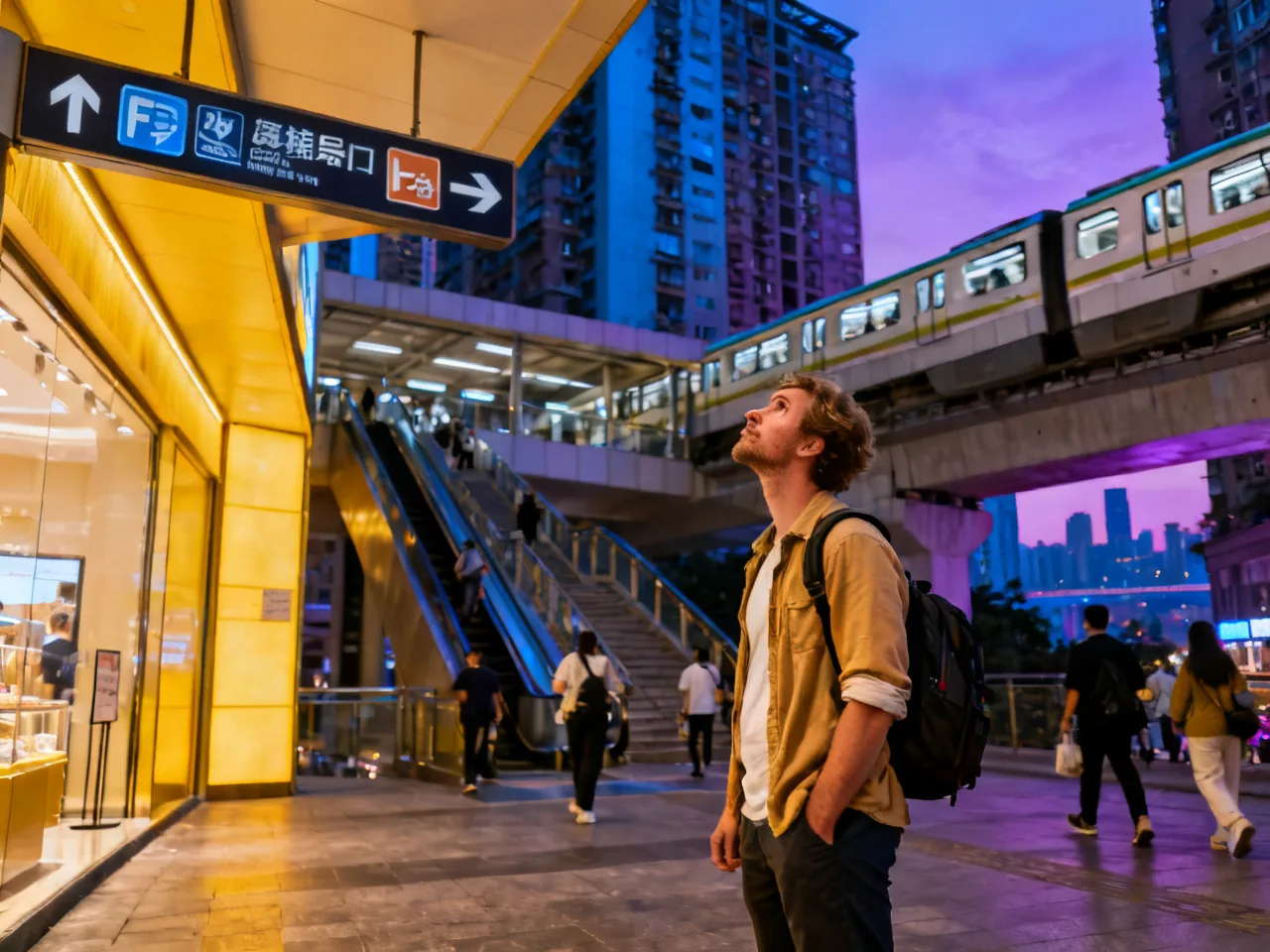
I truly fixed this lesson in my mind before a meetup near Guanyinqiao. The map showed the café right ahead, yet I looped twice inside the mall, passed the same advertising wall two times, and still did not find it. In the end I stopped walking in a hurry and checked the signage first: was I on B1, L1, or LG? Had I come out of the metro but not yet reached street level, or was I already one level above it? Once the floor relationship became clear, the route suddenly turned simple. In that moment I deeply understood why layered confirmation is steadier than single judgment, because in Chongqing the floor itself is part of the directional information.
Later I gave myself a few almost mechanical habits. When I leave the metro, I do not immediately rush with the crowd. I first check whether the exit says something like “to street level,” “to mall,” or “to skybridge.” When I open the map, I do not only look at distance; I also check whether nearby businesses show floor labels. If I am meeting someone in Chongqing now, I even ask directly: are you at an entrance on a certain floor, or are you at roadside level? That question is often much more useful than “where exactly are you,” because it instantly turns the space into something three-dimensional.
One evening, I was looking for a hotpot restaurant near Jiefangbei. The map suggested it was only a little more than a hundred meters away, but the more I walked, the stranger it felt. I could already see the restaurant sign, yet my route still would not connect to it. Instead of forcing myself onward, I stepped back to a place where floor markers and exit numbers were visible and re-evaluated whether I was on the sunken-plaza side or already facing the main street. A few minutes later, I found the correct entrance. After that, I believed even more strongly in the value of integrating through small actions, because what traps people is often not language, but not yet knowing how local space is read.
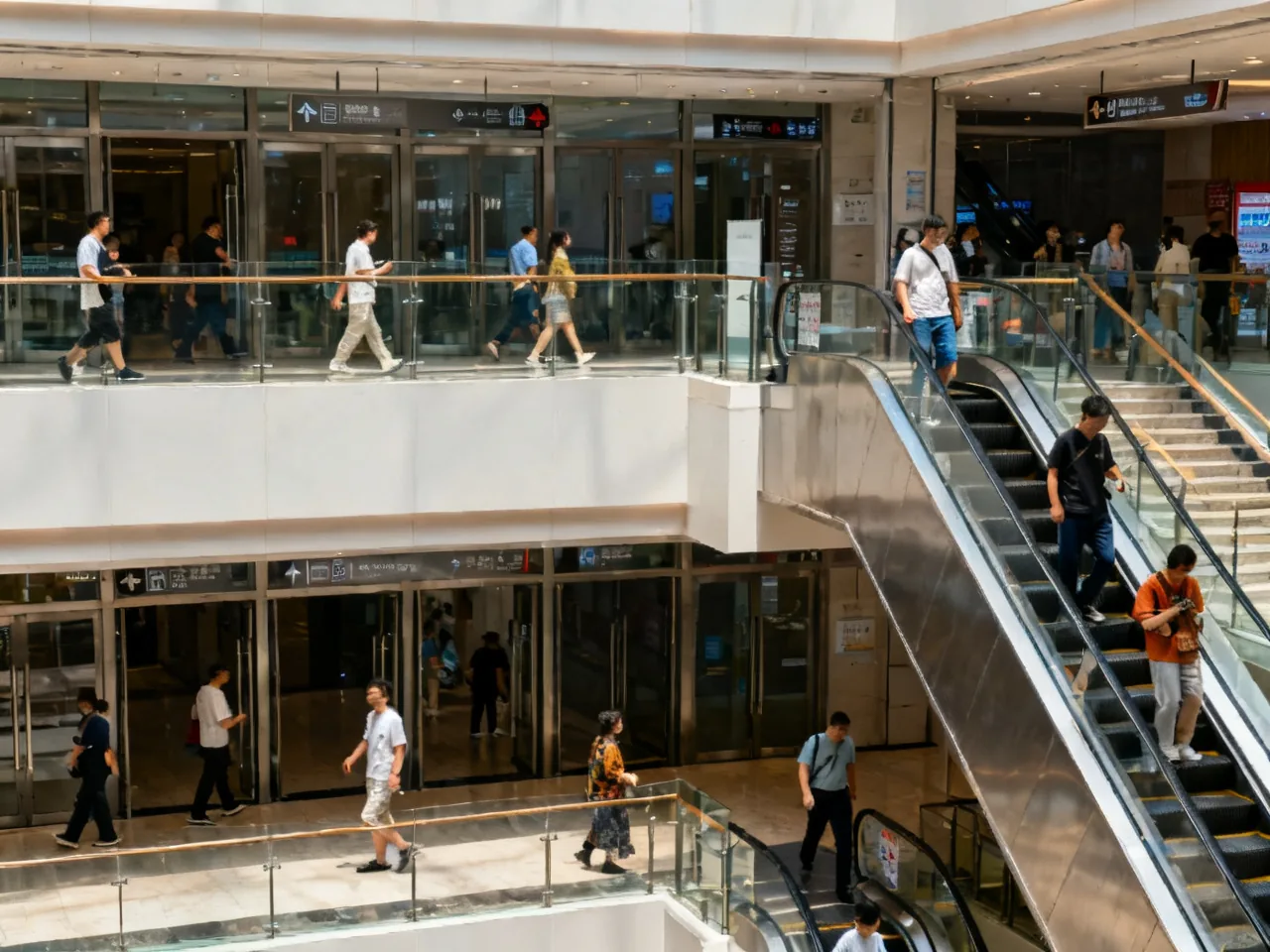
If someone asks me now what single thing is most worth learning first in Chongqing, I would not begin with hills or taxis. I would say: confirm what floor you are on. Once that part is clear, many routes that first seem almost surreal suddenly become logical. What finally made Chongqing feel easier for me was not memorizing more street names, but accepting that this city is not a flat puzzle. It is a three-dimensional map that must be read by floor first.