In Suzhou Gardens, I Learned to Find a Place to Sit Before Starting to Take Photos
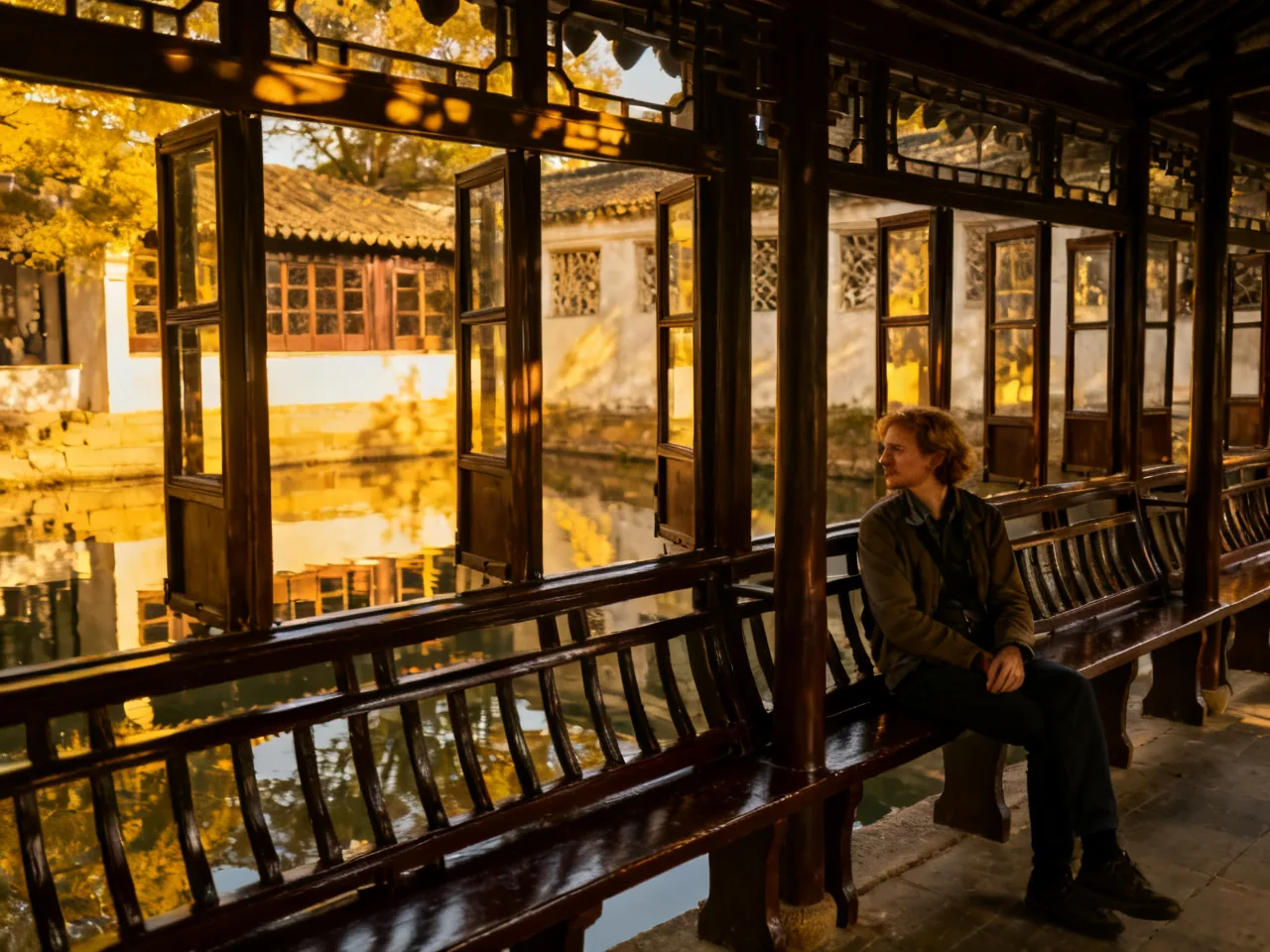
The first time I felt that I had truly “seen” something in a Suzhou garden was not when I pressed the shutter at a famous photo spot, but after I sat down first. That day, not long after entering, I did what many visitors do: instinctively walk and shoot at the same time. Moon gates, lattice windows, pond water, rockeries, and a branch leaning into the frame all seemed worth capturing. But after ten or fifteen minutes, I suddenly realized that although I had taken quite a few photos, I had not actually absorbed the atmosphere of the place. Later I found a wooden chair beside a corridor and simply sat there watching the water and the window frame across from it. That was the moment the garden truly slowed down and finally entered me.
Suzhou gardens make it especially easy for foreigners to enter a state of over-recording, because everywhere looks pre-composed already. Lift your head and there is framed scenery. Turn around and there is borrowed scenery. Walk a little farther and the light has landed on a white wall. It can feel as if every second is telling you to photograph it quickly. But over time I understood that what makes these places precious is not only the visual composition. It is the rhythm. If you are constantly moving, adjusting angles, and checking whether the image came out clearly, you can miss the most central thing in a garden: how it teaches you to pause, how it makes vision turn, and how a small patch of water can become more enduring than a grand scene.
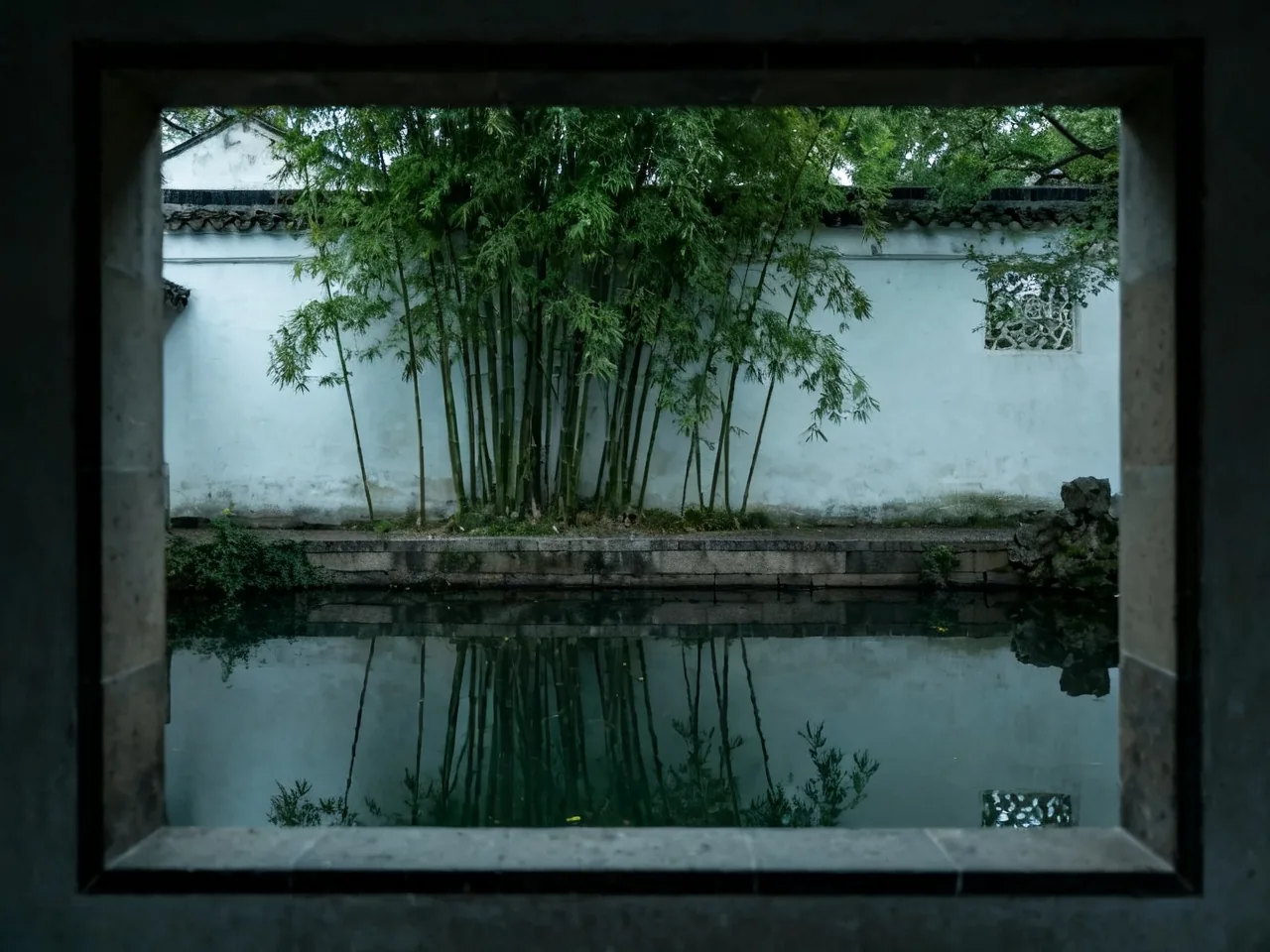
I truly learned this in an unremarkable corner of the Humble Administrator’s Garden. It was not crowded and not one of the places where everyone lined up for photos. There was only wind moving across the water, and a cluster of bamboo beside me occasionally touching together with a soft sound. I had planned to take one picture and move on, but after sitting there for two minutes, I finally noticed that the view inside the opening across the pond changed in layers whenever someone passed through, and even the reflection in the water was never fully still. That was when I understood that a garden is not a space for rapidly collecting attractions. It is a space where sitting down slows both your sight and your sense of time. I also came to agree more and more with the idea that comfort and security should be built on usable details, because a chair you can sit on and a corner where you do not have to keep moving often lead you into a place more deeply than any famous check-in point.
Later, when I visited other gardens, I started doing the same thing first: after entering, I would not rush to take pictures immediately, and I would not rush to locate the most famous scene first. I would look for a place where I could sit for a while and see water, a window, or the shadow of a tree. The act is tiny, but it changes the whole visit afterward. Once you sit first and your body slows down, your later photos and movements become steadier too. You start to know which angle is truly worth keeping and which turn only feels important because of crowd behavior. For foreign visitors, this matters especially, because what feels like “efficient sightseeing” is often just being pushed around by other people and by the camera itself.
Once, in the Lingering Garden, I saw many visitors enter while holding up their phones and moving quickly, as if they were afraid of missing something. I, however, sat down first beside a long corridor. A few minutes later, I realized that the same window produced completely different pictures depending on who passed through it: sometimes a strip of white wall, sometimes a branch, sometimes only a touch of color from someone moving in the distance. When I finally stood up and started taking photos, every frame felt more certain than it had at the entrance. After that, I believed even more strongly that layered confirmation before action is not useful only for transport, payments, or navigation. It also applies to seeing scenery. Confirm your own rhythm first, then decide whether to press the shutter. The photos are often better, and the trip feels fuller.
If someone asks me now what small habit is most worth building in a Suzhou garden, I would say: do not look for the perfect photo position first. Look for a place to sit. Let the eyes go quiet, let the feet stop, and only then let the camera begin working. This does not interfere with photography at all. In fact, it makes it easier to see what gardens do so well. They do not overwhelm you with spectacle. They slowly and gently turn you from a tourist in a hurry to record everything into a person willing to pause.