At a Dough Figurine Stall: The First Time I Saw Flour and Dough Grow a Face
If I had not seen it myself, I might have found it hard to believe that a small piece of colored dough could, within minutes, develop a human expression, an animal gesture, or even a playful personality that makes people smile. My first encounter with Chinese dough figurines was on an old street that was not even especially crowded with tourists. The stall was small, with colored dough, tiny scissors, bamboo sticks, and finished tigers, rabbits, and opera characters laid out on the table. At first I simply found them cute and easy to imagine as souvenirs. But once I stood nearby and watched the craftsman truly begin to shape one, I quickly realized that the heart of this folk art is not only resemblance. It is the ability to mold vitality in a remarkably short time.
The craftsman took a small piece of dough, rolled it, flattened it, and stretched it in his hand with movements so quick they barely paused. In his hands, the dough did not feel like raw material, but like a language that obeyed him closely: one pinch here became a nose, one lift there became an ear, and a gentle press with a small tool suddenly gave the eyes and mouth emotional tone. What surprised me most was how little waste there was in the process. Every gesture was light, yet every gesture worked. After watching for a few minutes, I began to understand that the real brilliance of dough figurine craft lies not in complexity, but in precision.
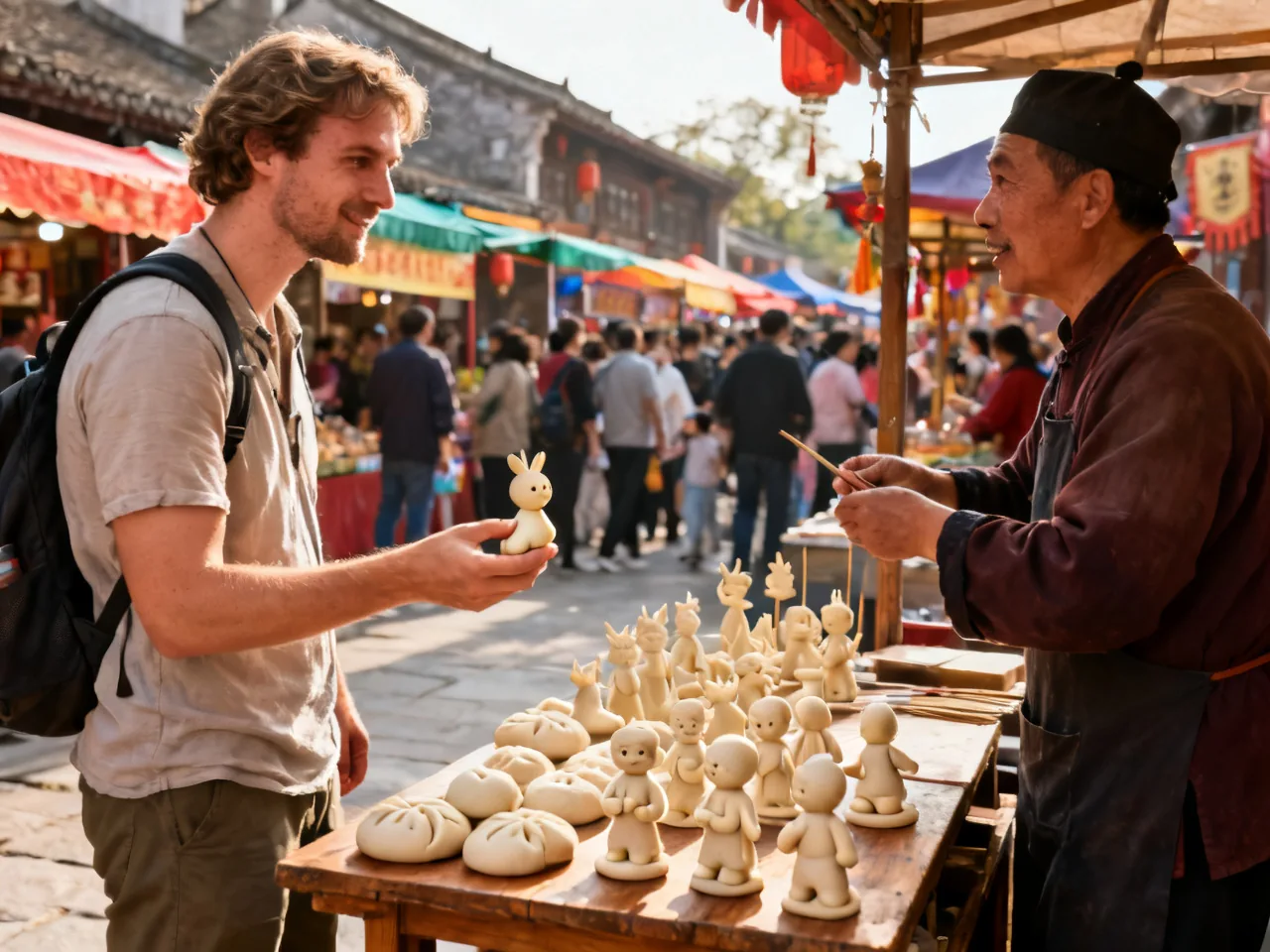
Later I tried making one myself. The craftsman suggested starting with a simple small animal, because human figures are the hardest, especially the face, which can easily become stiff or crooked. I chose a little rabbit, thinking longer ears and a round body could not be too difficult. But once I actually began, I discovered that “cute” is a very demanding standard. If the ears are too thick, the figure looks clumsy; too thin, and they cannot stand. If the eyes are placed too close together, it looks blank; too far apart, and the expression falls apart. The dough may be soft, but that does not mean it allows carelessness.
That is exactly what I love most about this craft: it tests your powers of observation under the disguise of playfulness. You think you are merely shaping something small, but in fact you are judging proportion, center of gravity, expression, and overall rhythm. Chinese dough figurines often depict zodiac animals, auspicious creatures, children, and opera characters. These subjects already carry a warmth that feels central to folk aesthetics. They are not elevated, distant artistic icons. They are a small-scale world that can easily enter everyday life, festivals, and children’s memory.
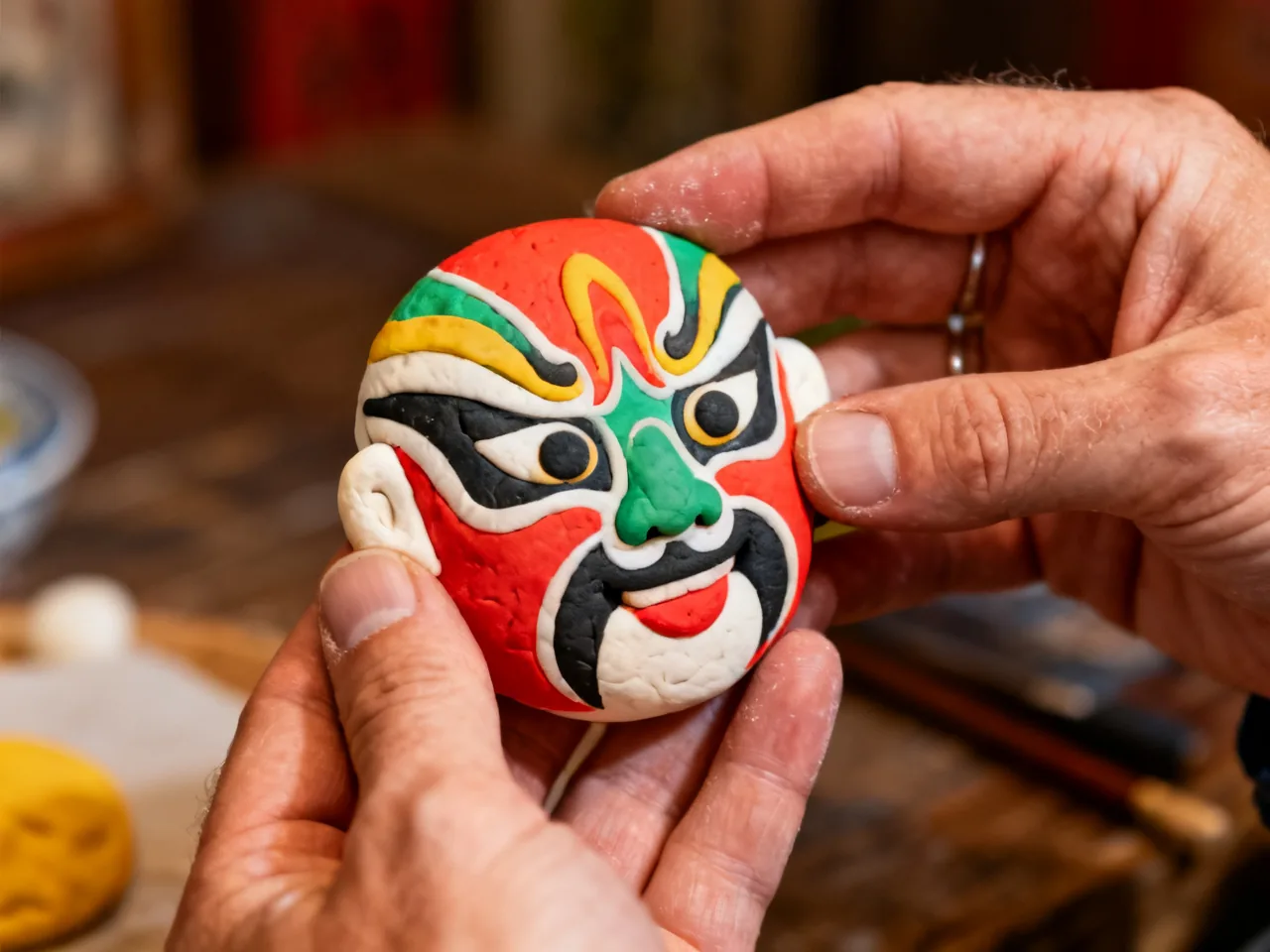
Because I come from Italy, I could not help connecting this experience with our own traditions of working by hand with dough. Italians are of course very familiar with the feeling of a lump of dough in the hand, whether through bread, handmade pasta, dessert decoration, or festive food shaping. Dough and touch are not foreign to us at all. But Chinese dough figurines still felt very different. In Italy, dough usually leads toward flavor and the table. In Chinese dough figurine art, dough is led toward image, blessing, and viewing. One is a craft meant to be eaten; the other is a craft meant to be preserved and looked at. The material may be similar, but the cultural direction is completely different.
That comparison made me genuinely happy, because it revealed a subtle but concrete cultural difference. You think you already know a material well, and then in another place it is given an entirely new function and emotional role. Chinese dough figurine art made me realize that folk art does not need expensive materials in order to feel precious. What matters more is how a society trains its eyes and hands over time, until even the most ordinary material can carry aesthetic meaning.
If foreign friends asked me today which Chinese folk art is most likely to make you smile while you watch, I would recommend dough figurines. Not because the craft is simple, but because it hides technical mastery inside warmth and playfulness. You laugh first, and only afterward realize how difficult it is to do well. When I left that old street, I was carrying the slightly awkward rabbit I had made, while a small tiger shaped by the craftsman sat carefully in my bag. All the way back, I kept thinking that perhaps the best moments in travel are exactly like this: you stop because of one small folk craft, and in return it reminds you that expression does not belong only to human faces. It can also live inside a piece of dough.