What Moves Me Most at a Wuxi Rush-Hour Crossing Is Not the View but the Way People Yield
At an ordinary intersection in Wuxi, the real density of the city suddenly appears during the evening commute. When the red light turns on, electric scooters, bicycles, buses, and pedestrians stop in their assigned places, like a moving river temporarily divided by several embankments. Trees at the four corners brighten and darken under passing headlights, shop signs along the road begin to glow, steam rises from a small window selling rice cakes, and a steady low hum comes from the elevated road in the distance. The crowd has no single expression, yet it shares a rhythm: someone watches the countdown signal, someone lowers their head to reply to a message, someone pulls a raincoat from a scooter basket, and someone carries takeout, keeping the wrist carefully balanced so the soup will not spill.
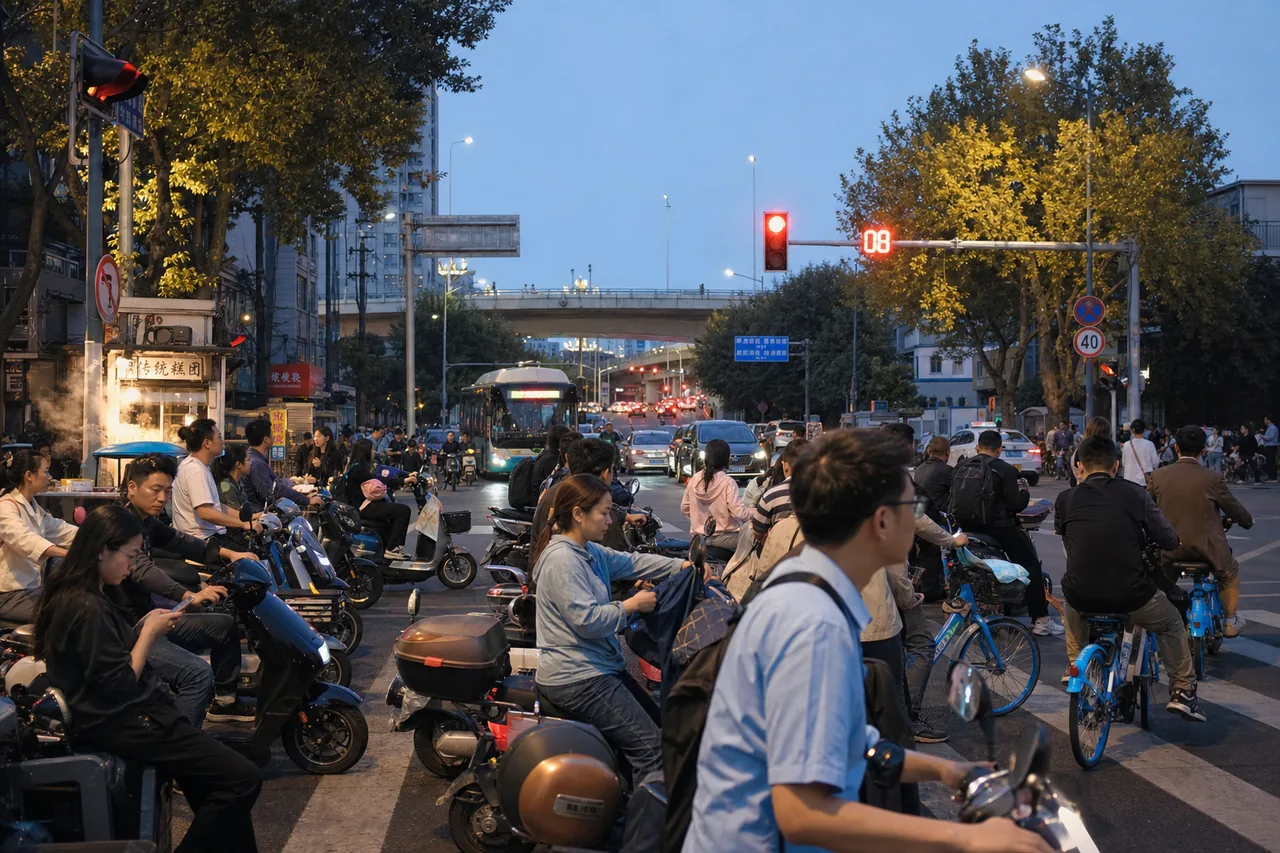
This intersection is not famous, nor does it offer a grand view for photographs. It simply brings many daily routes together. People moving east to west may have just left an industrial park, a little dust still on their trouser cuffs. Those moving south to north may be hurrying to pick up children, helmet straps not fully fastened. A young person with a laptop bag waits before the crosswalk, perhaps listening to a meeting recording, perhaps to a song repeated many times. An elderly person pushes a small cart carrying greens, tofu, and a newly bought umbrella. The light has not yet turned green, and everyone is held by the same white line. They are strangers, yet for this minute they share the breathing of the city.
Wuxi intersections have the softness of a water-town city. Even with heavy traffic, horn sounds do not completely cover the surrounding details. You can still hear tires tapping over a manhole cover, a pickup number called outside a milk tea shop, the release of air pressure when a bus door opens, and two middle school students debating whether to buy grilled sausages before evening study. Wind comes from the direction of the waterways with a hint of moisture, passing through people and vehicles, turning the plane-tree leaves along the road to reveal their pale undersides. Lights reflect on the damp pavement: red, green, white, and yellow crossing one another like the city spreading its complicated mood across the ground.
When the light turns green, the flow of people seems gently pushed forward. Electric scooters in the front row move first, handlebars turning slightly as riders search for gaps. Pedestrians then step onto the crosswalk, their paces different but all aimed at the opposite side. A bus starts half a beat later, large and restrained. A delivery rider slips along the edge, reflective strips on the box flashing once. No one truly conducts this movement, yet it almost always completes itself smoothly. People judge distance by experience, confirm yielding through glances, and rely on their bodies’ familiarity with the city’s tempo, turning congestion into order within seconds.
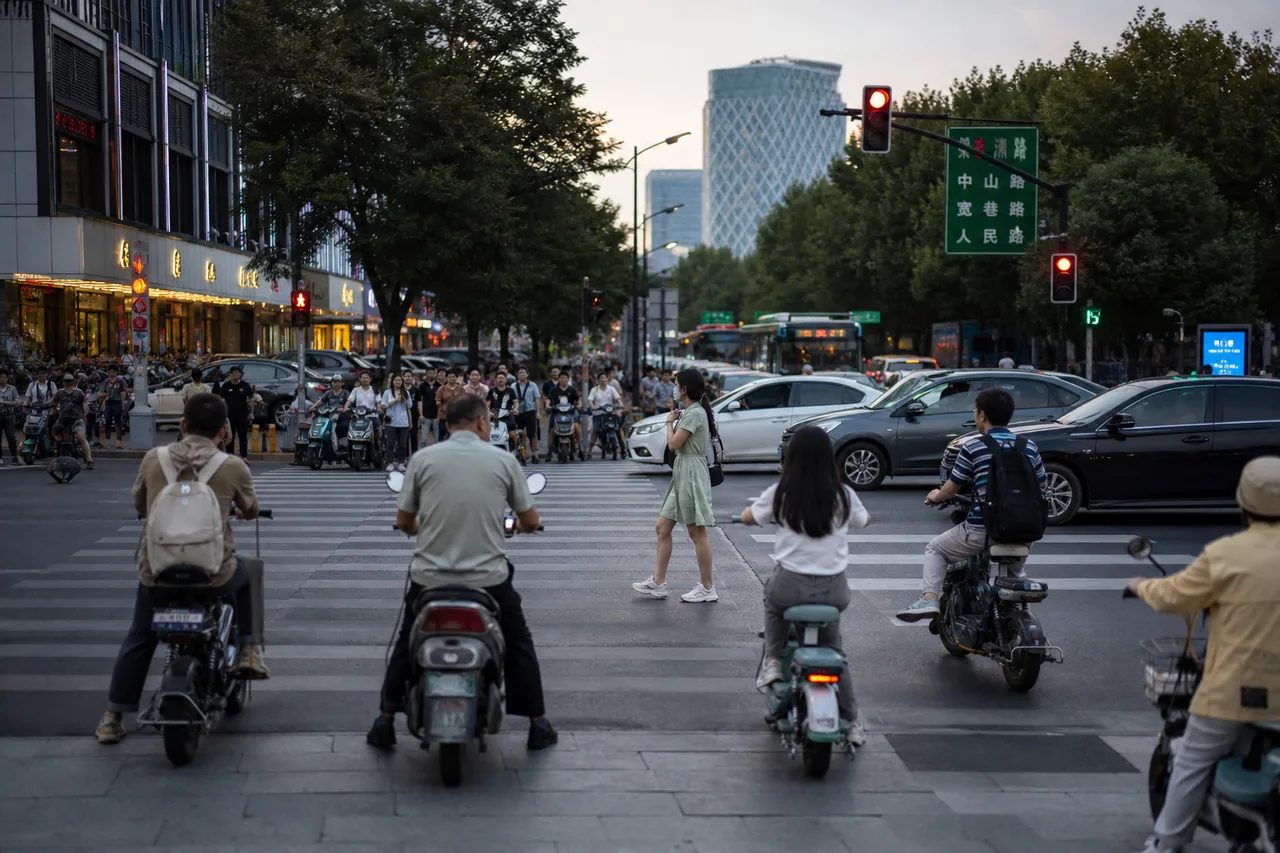
If you stand beside the intersection long enough, you notice that everyone carries an invisible story through it. The man holding flowers may be going to meet an old friend, or may simply want to add color to the dining table at home. The mother holding a child watches the light while patting the child’s back gently, as if keeping the noise of the intersection outside her palm. A young woman in work clothes eats a steamed bun by the curb, looking up at the signal after every bite, afraid to miss the chance to cross. An elderly cyclist keeps his speed slow but stays to the right, leaving room for those in a hurry behind him. The intersection gathers them briefly and releases them quickly.
That is the wonder of an intersection: it appears to be merely traffic infrastructure, yet it is actually a converter of urban life. Here people switch from work mode to home mode, from personal speed to public speed, from anxious waiting to action. Red lights make everyone stop, green lights let everyone disperse again, and yellow lights remind each person that hesitation also has limits. An intersection repeats this ritual countless times every day and is barely noticed, yet it maintains the city’s most basic trust: you stop for a moment and I cross; I yield and you pass safely; everyone wants to be faster, but everyone knows some space must be left for others.
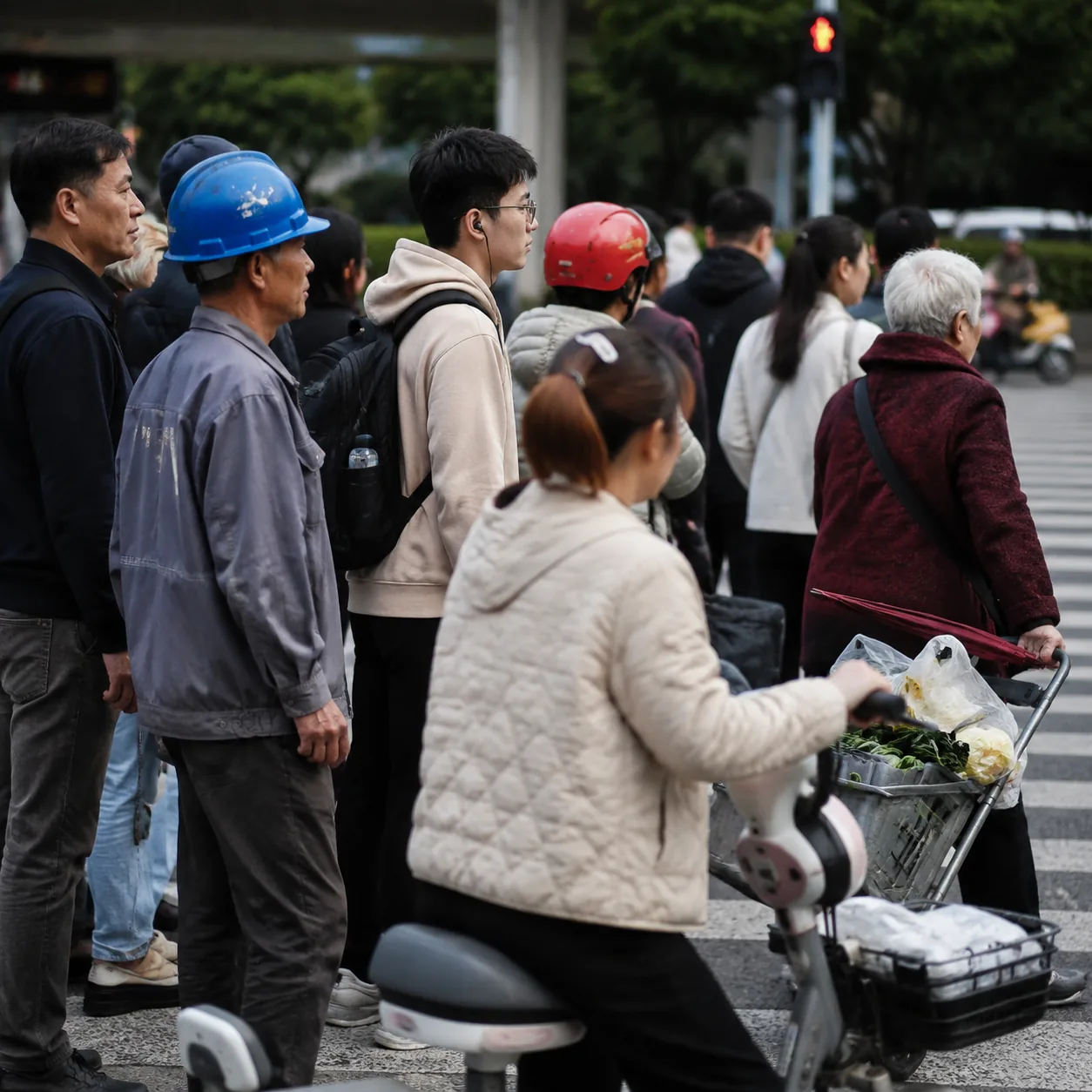
Wuxi’s evening deepens within this human flow. The convenience store on the first floor of an office building grows busy, a short line forming at the register. An electronic screen outside a pharmacy scrolls temperature and humidity. A fruit stall stacks mandarins into a small hill, bulbs making their peels shine. Someone straightens a shared bicycle by the roadside and casually brushes water from the seat. As people pass these places, they draw out the city’s needs one by one: a hot meal, a box of cold medicine, a bag of fruit, a commute home, a phone call not yet made. The intersection is not a destination, but it connects many destinations.
Sometimes waiting allows one to see the city more clearly. With thirty seconds left on the red light, a person in a suit suddenly relaxes the shoulders, as if finally leaving the posture of the office. Two riders stop side by side and discuss whether it will rain tomorrow. A girl beside the bus stop pulls her scarf higher and looks toward the direction from which the bus will come. A small dog on a leash carefully sniffs the ground beside the crosswalk, indifferent to human haste. Time is cut by signals into small blocks, and people recover themselves within those blocks. Not everything important happens at the destination; much delicate life occurs precisely in the gaps while waiting to cross.
After night grows thicker, the flow at the intersection does not disappear; it simply changes its composition. People working overtime, people taking walks, people buying late-night snacks, children leaving tutoring classes, couples heading to the supermarket—all continue to meet here. The sound of traffic becomes a little more hollow, shop lights stand out more clearly, and the white paint of the crosswalk seems polished under streetlights. A city runs on efficiency by day, but at night it keeps its warmth through those who are still willing to go out. They pass through the intersection, bringing fatigue, appetite, concern, and small expectations into the same patch of light.
When I leave, I look back at the intersection. The red light turns on again, the crowd stops again, and a new line replaces the one that just departed. No one will remember this round of waiting, and no one will tell the story of this crossing to others, yet these ignored repetitions support daily life. The flow of people at a Wuxi intersection is like a film without a single protagonist. Each person appears for only a few seconds, yet together they complete the city’s narrative. The light turns green, everyone moves forward, and moisture, traffic sounds, food aromas, and evening wind flow together. The city does not speak, but at this intersection it is clearly alive.
Perhaps truly understanding a city does not require climbing its tallest building or entering its most famous district. Sometimes it is enough to stand at an ordinary intersection, watch several cycles of signals, and see how people stop, wait, judge, and cross. Then you understand how the city organizes its life. Wuxi appears here as close and concrete: it has moisture, daily warmth, workers leaving industrial parks, children leaving schools, riders unwilling to waste a minute, and strangers willing to wait one second longer. The flow of people continues dispersing in four directions, and within that dispersal the city gathers itself again and again.