Before Seeing Chengde’s Mountain Resort and Temples, I Trained My Phone to Lead the Day
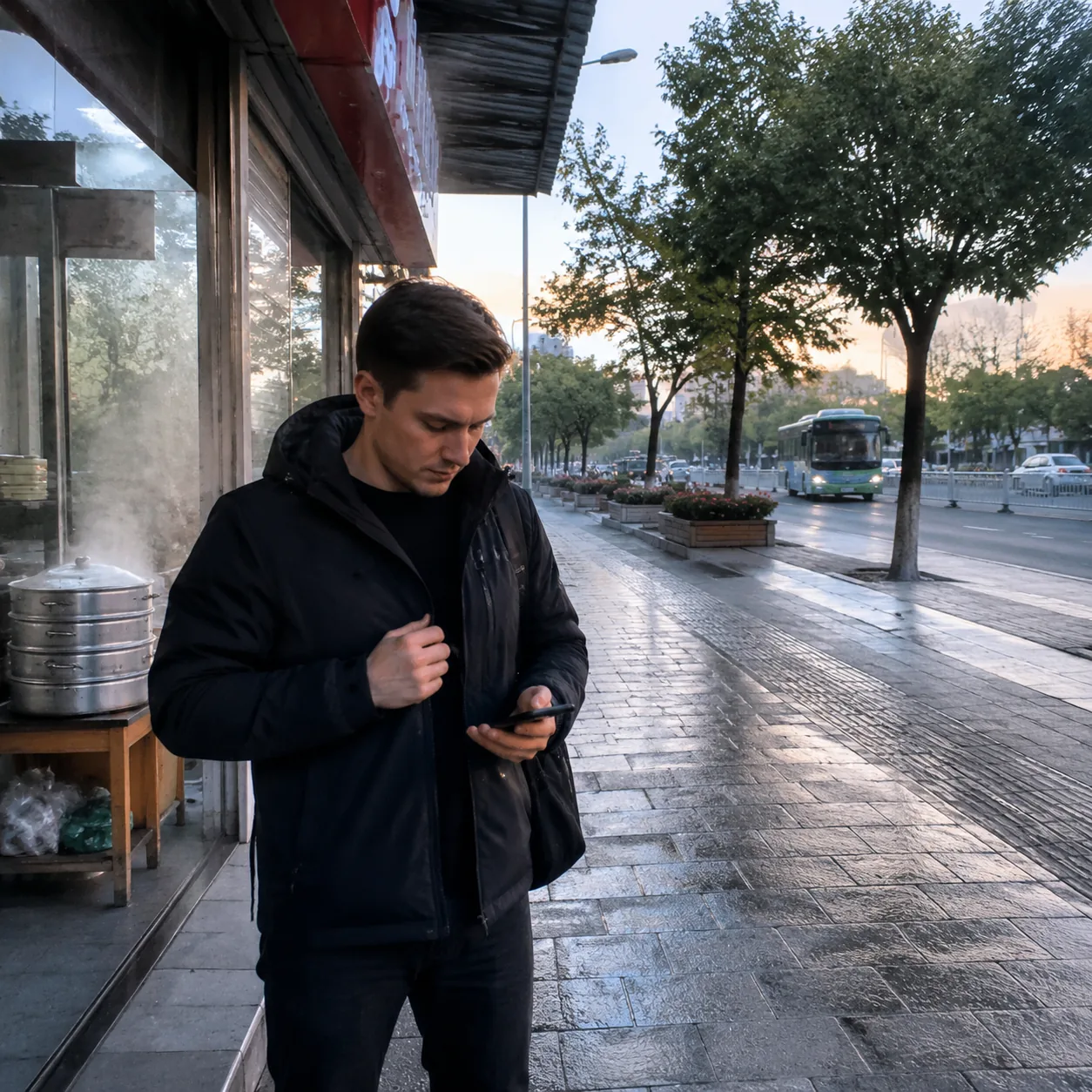
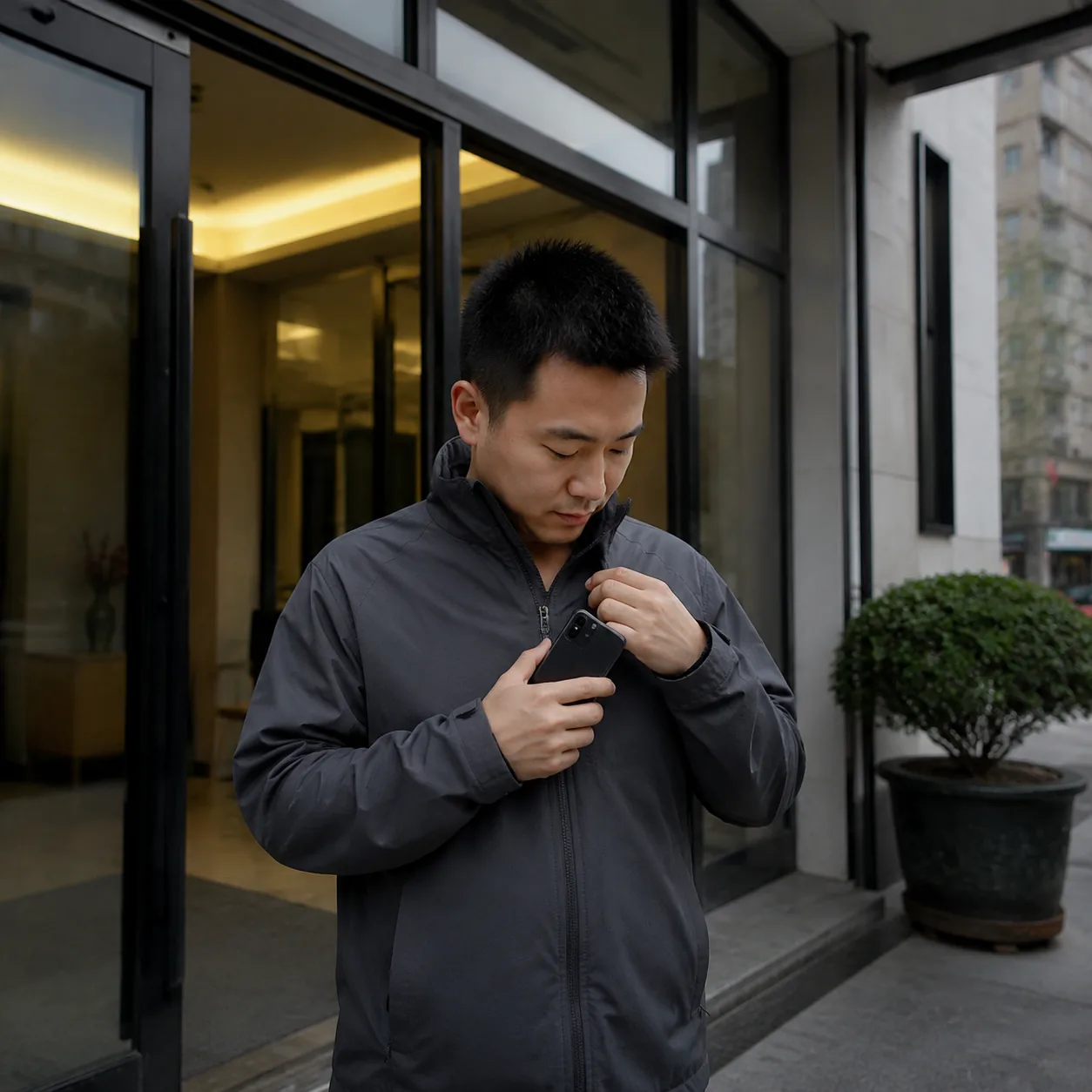
At 6:40 on a morning in September 2025, I stood at the entrance of a small hotel in Chengde, one hand fastening my jacket zipper and the other taking my phone from an inner pocket. Dawn had just arrived. Breakfast shops along the street were already giving off steam, bamboo steamers of dumplings stacked at the door, and the low braking sound of a bus came from the distance. I come from Budapest, Hungary, and had arrived in Chengde by train the previous day. My plan was to visit the Mountain Resort first, then see several temples among the Eight Outer Temples. The hotel owner had reminded me the night before that Chengde’s sights were not small in area, that the garden required a lot of walking, that the temples required rides between them, and that the temperature difference between morning and evening was noticeable. So before leaving, I did not hurry to open the camera. I stood at the doorway and checked my phone again. I wanted it to be less fancy and more dependable, because that day it was not only a camera. It was a ticket pouch, map, translator, weather station, payment tool, and emergency entrance.
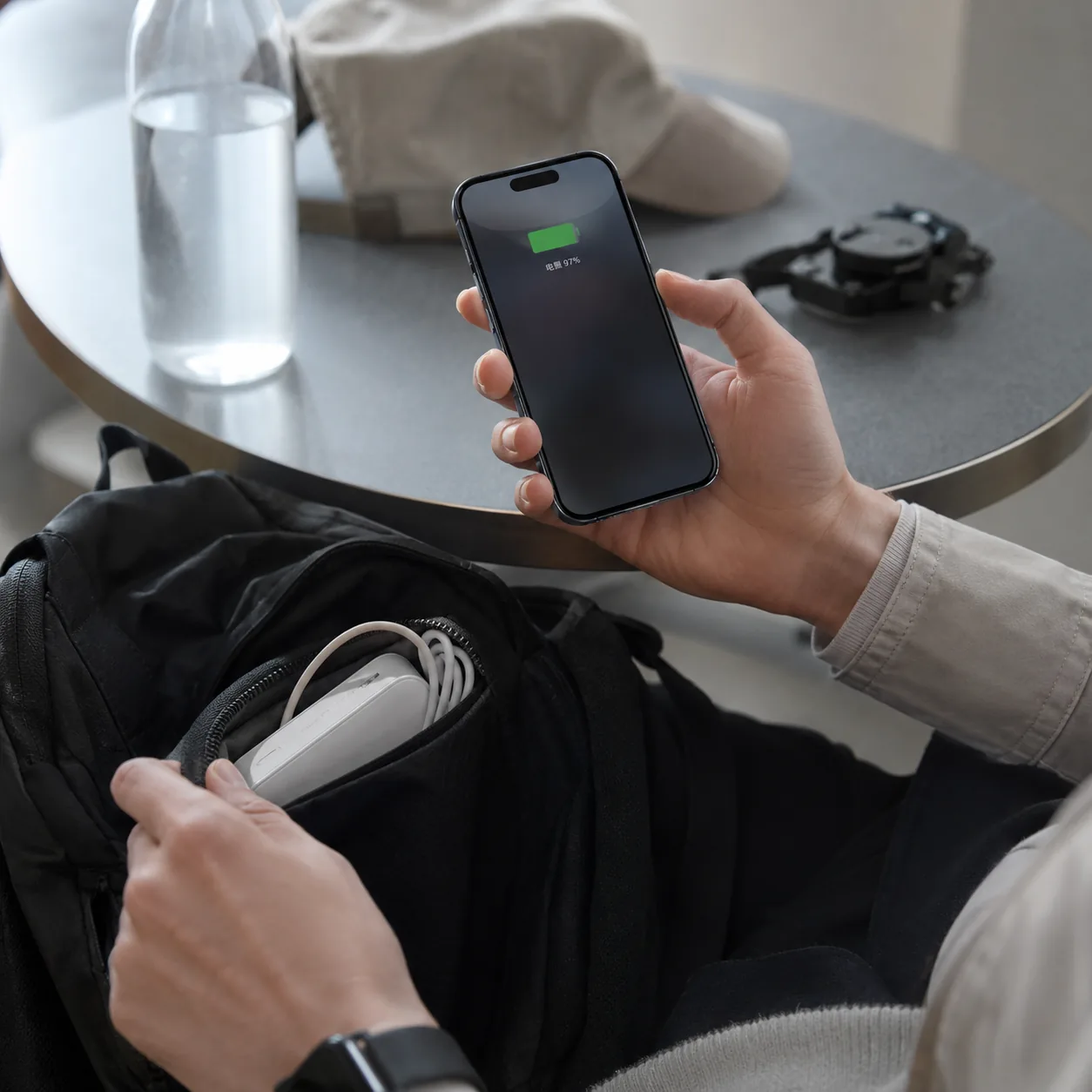
The first thing I checked was not social media but battery. After charging the phone to one hundred percent the night before, I unplugged it, and in the morning it still showed ninety-seven percent. The power bank was in the side pocket of my backpack, with a short cable coiled neatly and the connector facing outward so I would not have to mess up the bag while queuing or riding in a car. I turned on battery saver mode and disabled automatic downloads, cloud sync, and unnecessary background refresh, keeping only weather, maps, payment, translation, phone, and the ticket album. On earlier trips, I had treated my phone like a mobile office, with email, chat, news alerts, and photo sync all running. But before going out in Chengde, I decided to make it a little dumber: only six icons truly needed for the day remained on the home screen, so every time I lit the screen there would be a clear purpose rather than attention pulled away by unrelated messages.
Weather was the second item. Chengde’s morning felt a little cool, different from the stuffy heat I had felt while transferring in Beijing the previous day. The weather app showed that the temperature would rise slowly in the morning, that sunlight would be strong at noon, that wind would appear in the afternoon, and that evening could become noticeably cooler. I did not rely on one app alone. I compared a Chinese weather app, scenic-area notices, and a screenshot sent by the hotel owner. I saved an hourly forecast screenshot and marked the period of strong midday sun and the time when evening cooling would begin. The point was not to make myself anxious. The point was to know, even without internet or when it was inconvenient to open an app, when to drink water, when to find shade, and when to take out my jacket. Chengde’s scenery can easily make a person forget the body, but walking through gardens and climbing steps both require the body to remain reliable.
Map preparation could not depend only on live positioning. Inside the Mountain Resort, there are many paths through the lake area, plain area, and hill area, while the Eight Outer Temples are scattered in different directions. Before leaving, I downloaded offline maps for Chengde’s urban area, several main entrances of the Mountain Resort, the museum location, Puning Temple, the Little Potala Palace area, the parking point for Putuo Zongcheng Temple, and the route back to the hotel. After the download finished, I turned off mobile data and tested once to confirm that place names, saved points, and walking routes still appeared. I also wrote a conservative plan into an offline note: the Mountain Resort in the morning, only two temples in the afternoon, no last-minute addition of distant stops; if I had not left the second temple by four in the afternoon, I would return to town for dinner. The rule looked rigid, but it could make decisions for me when fatigue and excitement appeared at the same time.
I did not keep tickets and identity information in only one app. I took screenshots of scenic reservation QR codes, purchase records, the passport information page, the hotel address, the entrance for the day, opening hours of several temples, and document information that might need to be shown, then placed them in a local album named “Chengde Today.” I enlarged each screenshot beforehand to confirm that the name, date, entrance, and QR code were clear. To prevent the gallery from trying to load cloud-only files under weak signal, I made sure the images were stored locally and opened them once in airplane mode. Passport photos were not sent into public chat groups; they stayed only in an encrypted album. This preparation sounded plain, but it reduced the panic of searching for information at ticket gates, service windows, and inside taxis.
Payment preparation also needed to be conservative. Mobile payment is convenient in Chengde’s urban area, but at scenic entrances, parking points, small stalls, and deeper inside the resort, the network can sometimes slow down. I confirmed that Alipay and WeChat Pay both opened, that my usual bank card was active, and that I had a small amount of cash in my wallet inside a waterproof pouch. I did not store full bank card photos on the phone. Instead, I wrote the bank customer-service number and the last digits of the card into an offline note, in case I needed to contact them. To reduce accidental payment, I lowered the no-password payment limit and decided not to connect to unfamiliar free Wi-Fi after leaving. The phone usually stayed in the inner pocket of my jacket and came out only for photos and payment. Chengde’s ancient buildings and landscapes are very suitable for photography, but while queuing, crossing roads, and boarding vehicles, I preferred the phone to stay quietly in one fixed place.
I also adjusted translation and language settings in advance. My system language is English, but I checked the region settings in the map and payment apps to avoid sudden prompts I could not understand on ticket or entry pages. The translation app downloaded offline Chinese and English packs, and I saved several sentences in advance: whether this entrance could be used for the Mountain Resort, where to take a ride to Puning Temple, whether taxis were available here, where the nearest visitor center was, and that I needed help but was not injured. Keeping these sentences in favorites was more reliable than typing them on site amid wind, voices, and traffic. The hotel owner listened to me read the sentences, laughed, and corrected two pronunciations, saying staff would understand more easily that way. I also recorded the corrected audio and saved it on the phone.
Contact planning could not rely only on instant messages. I saved the hotel phone number, scenic-area service hotline, travel insurance number, the number of a friend in Beijing, and emergency family contacts in Hungary directly in the phone address book, not only inside chat history. I sent the day’s route to the friend in Beijing and told him that if he had not received my safe-arrival message by eight in the evening, he could call the hotel first. I also attached a small paper label to the back of my phone case with my name, the hotel number, and my friend’s number, sealing it under clear tape. That way, even if the phone ran out of battery, someone who found it would have a chance to contact me. The biggest danger for a phone is not a temporary lack of signal, but when every clue for help is locked inside a black screen.
To make the phone more reliable, I made it speak less. Notification sounds were turned off, vibration remained, entertainment apps were removed from the home screen, and news, short videos, and email no longer refreshed in the background. The camera stayed available from the lock screen, but automatic cloud sync was disabled. I did this for two reasons: battery life and attention. Inside the Mountain Resort there are many waterside paths, steps, and tree roots, and the temples also have slopes and stone stairs. If attention is constantly pulled away by message alerts, it becomes easy to miss what is underfoot. I did not want the phone to keep calling me back while I looked at lake surfaces, palace walls, and mountain shadows, and I did not want to stop on steps to answer a non-urgent message. That day, the phone needed to support the journey, not command my attention.
After finishing the check at the hotel entrance, I walked toward a breakfast shop. While eating millet porridge and steamed dumplings, I did one final offline test: opening the ticket album, offline map, saved translation sentences, and the scenic-area phone number in contacts. Each item appeared without mobile data. The breakfast shop owner saw me checking as carefully as if inspecting a hiking pack and laughed, saying Chengde was not to be rushed because the garden was large and should be walked slowly. I nodded, put the phone back into my inner pocket, and zipped it closed. Her words reminded me that preparing the phone was not about staring at it longer. It was about shortening the time I had to depend on it. Once inside the garden, I wanted to use my eyes more to look at paths, trees, and water, not switch back and forth between apps.
The first test came when entering the Mountain Resort. There were quite a few people at the entrance, with tour-group flags, ticket-check sounds, and visitors’ voices mixed together. The phone signal dropped from full bars to two. I did not try to refresh the ticket page. I directly opened the reservation screenshot stored in the local album and prepared the passport information page. A staff member glanced at it and reminded me that one area was under temporary maintenance that day, suggesting I walk through the lake area first and then the plain area. I immediately photographed the notice board and added a star to the maintenance point on the offline map. The action took less than a minute, but it prevented hesitation later if I heard different explanations. The phone did not become smarter there. It simply kept clear information from being scattered by crowds and weak signal.
After entering the lake area, I appreciated the benefit of making the phone simpler. Many visitors walked while filming videos and searching which angle most resembled a historical drama scene, with web pages spinning from time to time. I did not open social apps or search for last-minute guides. I looked only at the route saved in advance: enter near Lizheng Gate, walk slowly along the lake, see several main buildings, then find a shaded place to rest. At each fork, I first read physical signs, then checked the offline map, not allowing the blue location dot to make every judgment for me. The wind by the lake was light, and the tree shadows were beautiful. If I kept lowering my head to wait for positioning to refresh, I would miss the slow movement of light on the water. The steadier the phone preparation was, the more able I was to put the phone away.
When the sunlight grew strong at noon, the saved weather screenshot became useful. I knew that this hour was not suitable for forcing myself to walk too long, so I sat beside a pavilion, drank water, ate biscuits from my bag, and connected the phone to the power bank for more than ten minutes. While charging, I did not place the phone on the hot stone bench. I put it into a small cloth bag inside my backpack to avoid overheating. An uncle from Beijing nearby saw me carefully letting the phone rest and laughed, saying people should rest too. I then realized that battery management and energy management are actually similar: the goal is not to keep the number beautiful, but to have a margin when judgment, contact, or ticket purchase is truly needed. Chengde’s garden is large, and forcing oneself to walk too much is like wasting battery carelessly; both become trouble in the afternoon.
In the afternoon, when I prepared to visit temples, the phone’s role changed again. Inside the Mountain Resort, walking was the main method, but after leaving the garden, visiting the Outer Temples required confirming transportation. I did not search many different opinions at the gate. I opened the sequence in my offline note: Puning Temple first, then decide whether to visit the Little Potala Palace based on energy. The taxi driver asked whether I wanted to cover several places. I did not immediately agree to a chartered route. I followed the plan and said Puning Temple first. The saved address on the phone made communication simple. I showed him the Chinese place name, and he nodded and drove. This approach reduced flexibility a little but added stability. The hardest part of travel is not finding more options, but knowing not to add more when there are already too many.
At Puning Temple, the wind was more obvious than in the city, and people stopped on the steps to adjust hats and scarves. I checked the weather screenshot again, confirmed that evening would cool down, and pulled my jacket zipper higher. Temples require quiet, so I set the phone to vibration. Before taking photos, I checked whether photography was prohibited and did not raise the lens casually inside halls. The translation app was not often needed here, but I kept several polite sentences in favorites, such as asking whether photos were allowed, where the exit was, and saying thank you for the reminder. The best state for a phone inside a temple is helping me disturb others less, not helping me take more pictures. The more prepared it is, the more one knows when not to use it.
At one point I almost went toward the wrong exit. Near a side gate of the temple, the flow of people split in two directions, and the phone location froze in place, the blue dot unmoving as if blocked by walls. I did not choose by instinct, and I did not stand for long in the middle of the passage. I stepped aside, opened a saved sentence, and confirmed the direction to the parking point with a staff member. She quickly pointed it out and reminded me that the steps there were high and that I should descend slowly. I turned back, photographed the exit sign, and added a short note to the offline map. That small moment made me more certain that the most reliable use of a phone is not pretending it always knows the answer, but helping me ask a clearer question when it does not.
Battery management became important around four in the afternoon. Many people had already taken large numbers of photos by then, and phones were heating up while gallery sync, navigation, and short videos consumed power together. I checked my phone and still had sixty-one percent, with plenty left in the power bank as well. This number gave me room to handle the return: checking routes back to town, confirming whether taxis were available nearby, and sending my friend in Beijing a message about roughly when I would return to the hotel. After sending the message, I waited until it showed delivered, then took a screenshot of the chat record to avoid later thinking it had not gone out if the network jumped backward. For the remaining time, I took out the phone only when necessary and kept the screen off as much as possible. Battery is not something to save for its own sake; it should be reserved for moments when judgment and contact are truly needed.
When I returned to the city in the evening, the wind had become much cooler. I ate hot noodle soup in a small restaurant, and only after sitting down did I realize that I had not panicked because of the phone all day. I had not failed to find tickets at the entrance, had not become irritated waiting for maps to load inside the garden, had not blocked the way inside temples while typing into a translator, and had not worried in the afternoon that the battery was about to die. The phone had not become more advanced. I had simply organized it in advance into a reliable small tool. It stayed quiet when it should be quiet, displayed things when it should display them, and still had content when offline. This preparation did not look clever, and even seemed a little dumb, but exactly that dumbness made the day steadier.
Back at the hotel that night, I connected the phone to power and backed up the day’s photos, but I did not immediately post them on social media. I first deleted several duplicate ticket screenshots and kept the maintenance notice, exit sign, and a few lakeside photos I truly liked. The hotel owner asked whether the day had gone smoothly. I said it had, because the phone had not held me back. He smiled and said that coming to Chengde meant going slowly and not letting the phone hurry me. I nodded and felt the sentence was accurate. Making the phone simpler and safer before going out was not about controlling every detail of the journey. It was about making it reliable at key moments and letting it retreat into the background most of the time. Only then could I truly remember Chengde’s wind, lake surface, red walls, and evening streets turning cool, instead of remembering only how many times I searched for answers on a screen.