Shanghai: The Bund & Longtang Culture
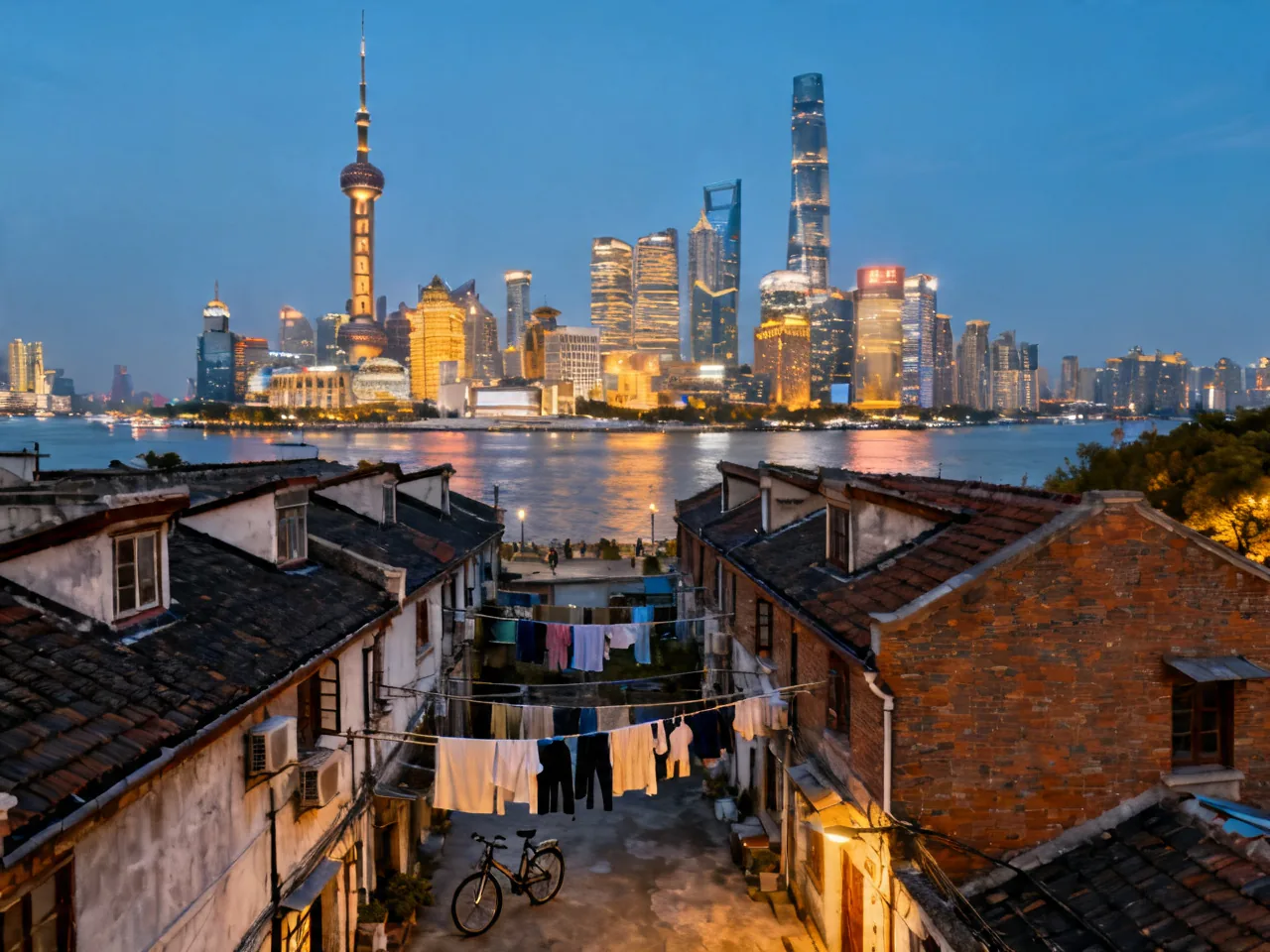
The Bund skyline is Shanghai’s calling card to the world, but the longtang alleyways are where Shanghainese actually live. They’re just a few kilometers apart, yet they’re two entirely different cities.
The Bund: Go at Dusk
The Bund’s colonial buildings are one thing in daylight and something else entirely after the lights come on at dusk. Arrive around 4 PM, walk the full promenade in natural light (about 1.5 km from Yan’an Road to Garden Bridge), then wait for sunset. Across the river, Lujiazui’s three towers — Oriental Pearl, Jin Mao, Shanghai Tower — transform from silhouettes into a light show as darkness falls.
Garden Bridge (外白渡桥) is the Bund’s most underrated spot. Built in 1907, it’s Shanghai’s oldest surviving steel bridge. Stand on it at dusk where Suzhou Creek meets the Huangpu River — lights reflecting off both waterways, far quieter than the main promenade.
Cross by Ferry
Getting from the Bund to Lujiazui by metro requires a long detour, but the ferry takes 2 minutes and costs ¥2. Jinling East Road Ferry Terminal sits at the southern end of the Bund, with departures every few minutes. Standing at the bow watching both shores is Shanghai’s cheapest scenic experience — tourists rarely know about it, but locals use it daily.
Longtang: Shanghai’s Capillaries
Longtang are Shanghai’s distinctive shikumen alley neighborhoods — brick-and-timber row houses connected by narrow lanes, the living quarters of Shanghai’s middle class in the 1920s-40s. Most have been demolished, but a few well-preserved pockets are worth a dedicated visit.
Tianzifang is the most famous converted longtang — commercialized, but the architecture is intact. Good for an afternoon visit: buy a coffee and sit in the alley to feel the spatial scale. Laundry poles and AC units overhead, century-old walls on both sides — that compressed intimacy is uniquely Shanghai.
Xintiandi is another shikumen renovation, positioned upmarket. The shells are old; the interiors are restaurants and boutiques. Good for dinner, not for experiencing real longtang life.
Bugao Li on South Shaanxi Road is one of Shanghai’s best-preserved authentic longtang, still inhabited. No commercial development — walk in and you’re in real Shanghai daily life: communal laundry areas, shared water taps, neighbors playing cards at the alley entrance. Keep quiet and don’t disturb residents.
Two-Day Itinerary
Day 1: Afternoon at the Bund (arrive 4 PM, wait for sunset). Take the evening ferry to Lujiazui, go up Shanghai Tower (632m) for the night view, dinner back near the Bund.
Day 2: Morning at Bugao Li or Tianzifang for longtang atmosphere. Lunch at Xintiandi. Afternoon stroll along Wukang Road in the former French Concession — Wukang Mansion, Song Qingling’s former residence, and layers of Republican-era architecture make this Shanghai’s best street for aimless wandering.
Practical Notes
The Bund promenade gets extremely crowded on weekend evenings — go on a weekday if you want breathing room. Phone navigation often fails inside longtang areas; screenshot your map for offline use. Shanghai’s metro covers everything well, but Lines 1 and 2 are brutal during rush hour.
Related Reads
- 10-Day East China Five-City Loop
- Lijiang Old Town: Naxi Culture & Snow Mountain Views
- Zhangjiajie Glass Bridge & Tianmen Mountain Guide
- Guilin Li River Scenic Tour Complete Guide
- Spring Bloom Map: China’s Most Beautiful Flower Fields