Once Rain Hits Guangzhou, What Needs Rearranging Is Not Your Mood but the Sunny-Day Route You Trusted
I only realized later that the easiest thing to get wrong in rainy Guangzhou was not the route itself, but the traveler’s inertia. Many first-time visitors to China break into two extremes the moment rain appears: either they retreat indoors completely, or they stubbornly try to force the sunny-day order onto a wet city. Both approaches feel unsatisfying. Rain in Guangzhou does not automatically mean failure. The real issue is whether one can change logic. Arcade streets, teahouses, market edges, short walking segments, and pauses with hot food can reshape the entire line. Once reorganized, rain may actually bring the city closer.
Rainy Guangzhou is especially well suited to a retrospective format because it forces one admission: what makes a city truly walkable is not how photogenic it becomes in perfect weather, but whether it continues to give you a route once things become damp, slower, and more slippery. Guangzhou is unusually strong here. It does not erase the rain. It absorbs the rain into the rhythm.
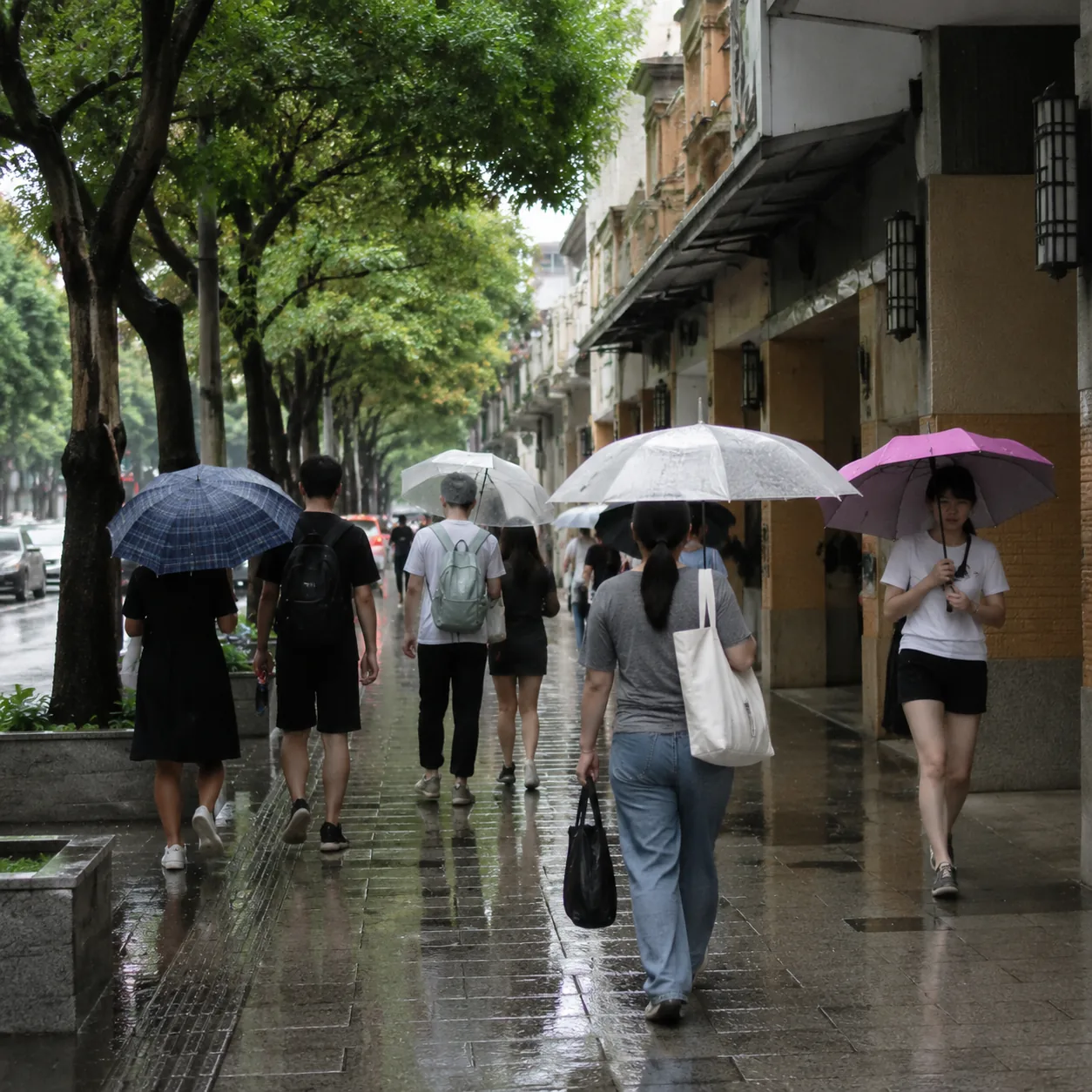
In Rainy Guangzhou, Read Shelter and Pause First
On a sunny day in Guangzhou, many people read the road first. On a rainy day, one should read shelter first. The value of the arcade streets becomes fully visible only once rain begins. The traveler is not merely hiding from water. Inside that shelter, one regains time for judgment: should this section still be walked, is the next place worth sitting in, and has the brick underfoot already become too slick? The most valuable thing on a rainy day is not speed. It is the permission to be half a beat slower.
In Rainy Guangzhou, One Hot Dish Often Matters More Than One New Attraction
Rain narrows mood. A traveler may have wanted to keep walking or see one more street, but once the edges of the shoes are wet, many judgments suddenly become shorter and harsher. Guangzhou is clever because it repeatedly finds ways to widen that narrowed feeling through something hot. Noodles, porridge, dessert soup, hot tea—these things matter even on clear days, but in rain they feel more like a reset key for the route. The rain may not stop when one leaves the shop, but the road will feel walkable again.
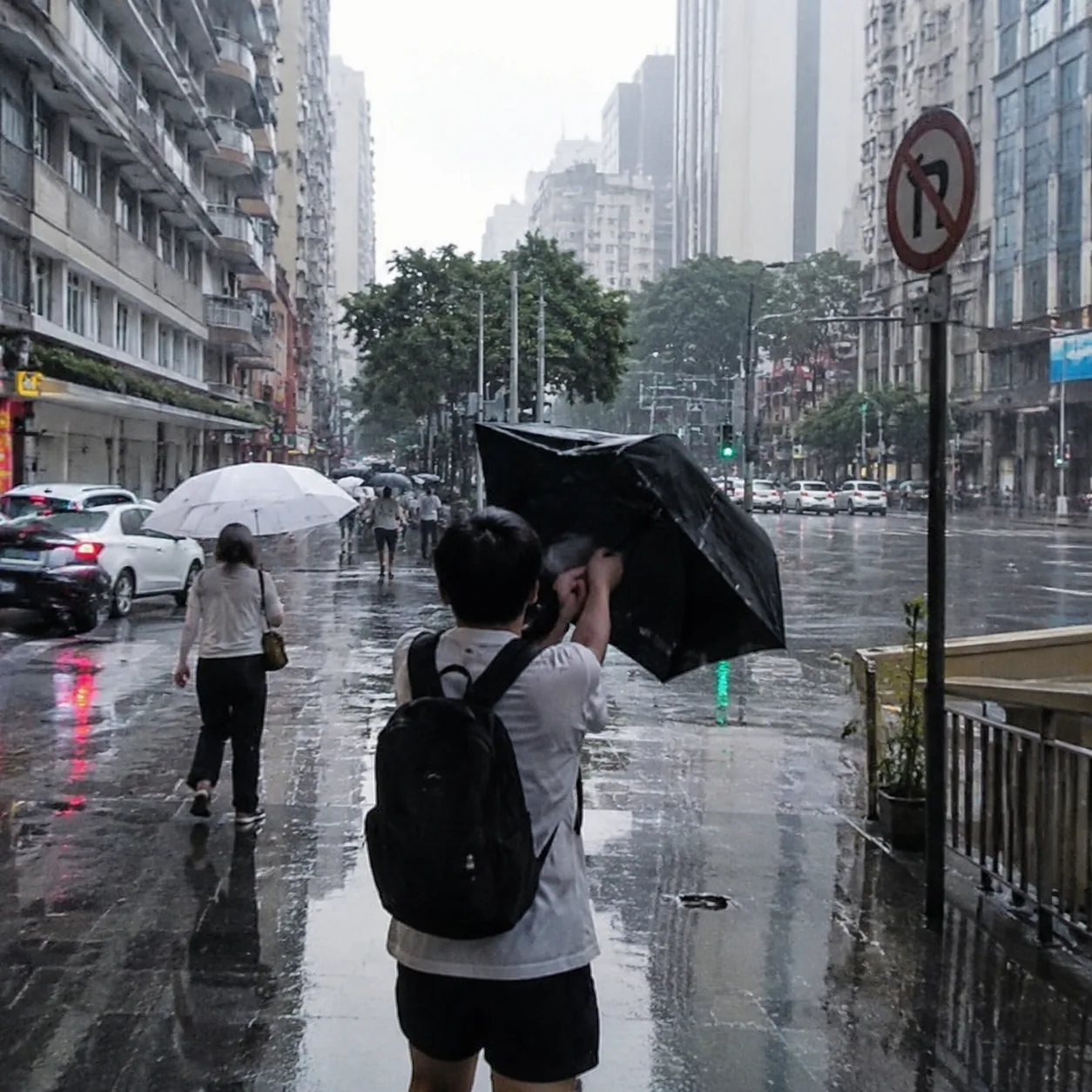
A Good Rain Route Is Not About Staying Dry at All Costs, but About Preventing Disorder
Many travelers define a rainy-day objective too narrowly: try not to get wet. That instinct is understandable, but once it becomes the only goal, the route falls apart quickly. A steadier method is to shift the goal to avoiding disorder. Do not rewrite the day completely, do not add too many indoor substitutions, and do not let one rain shower shatter the entire schedule into fragments. Guangzhou is especially good on rainy days because small changes are often enough: shorten the walking segment, lengthen the pause, and move the broadest outdoor section later. The route then works again.
Rain Reveals Best Whether a City Knows How to Receive a Traveler
On a good-weather day, many cities can appear smooth. The real test arrives when the sky darkens, the ground turns slick, and the hem of one’s clothes begins to catch moisture. That is when the route either continues to hold or falls apart. Guangzhou performs especially well here because its sheltered space, hot-food culture, and street-side pause points are already abundant. Rain simply magnifies this receiving ability that often stays less visible in dry weather. For a first-time visitor to China, that ability matters more than one perfect-weather viewpoint, because it proves the city does not work only under ideal conditions.
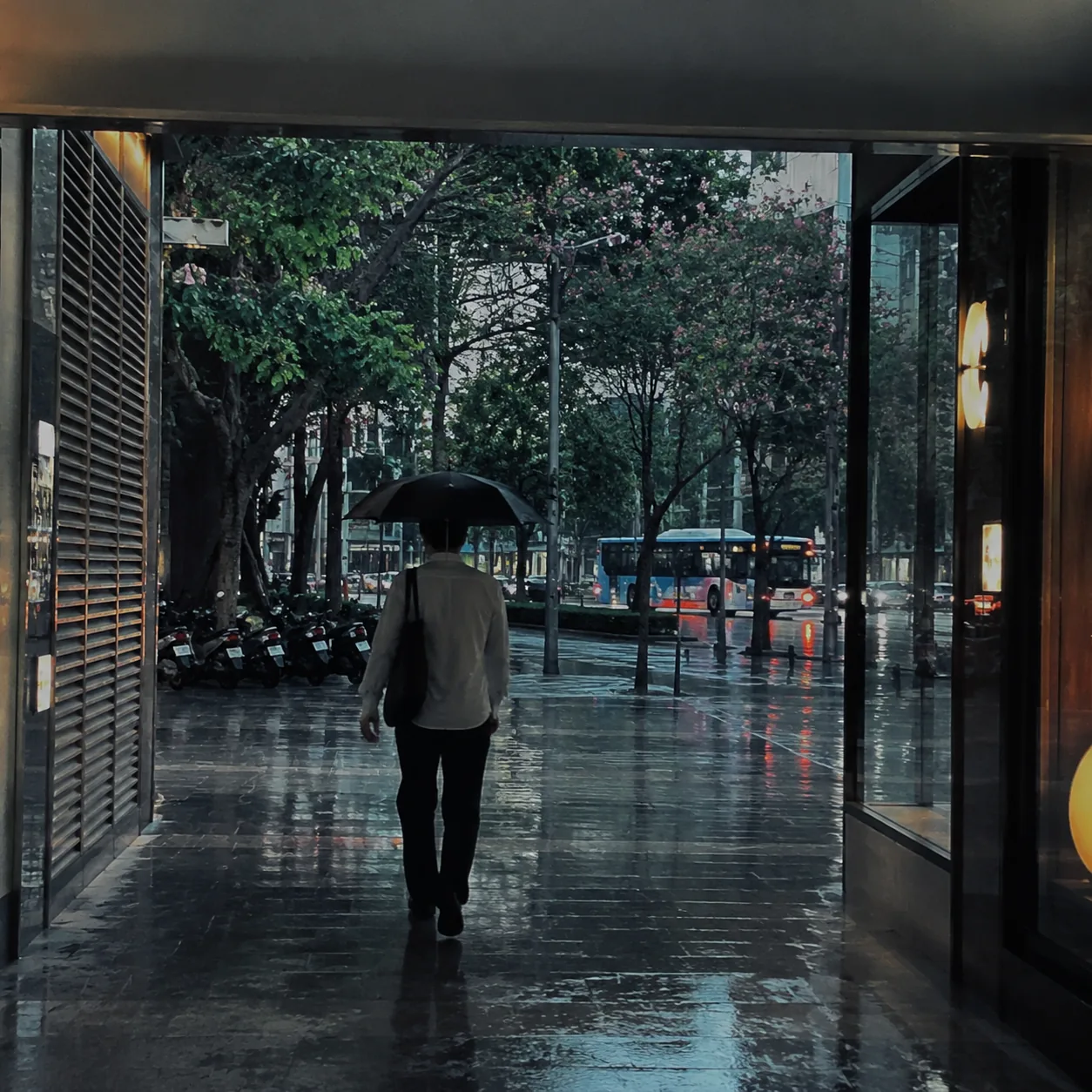
One More Detail: On a Rainy Day, Decide Early That Today Is Not for Proving Anything
Many routes become distorted by pride the moment rain arrives. The traveler thinks: I have already come this far, so I should not alter the plan because of one shower. But that attitude rarely produces a better day. It usually produces a more irritated one. In rainy Guangzhou, the smarter approach is to decide early that today is not meant to prove efficiency, but to keep the day from breaking apart. Once that judgment is made first, every later adjustment—shortening a walk, lengthening a pause, or moving the furthest segment to the next day—becomes much more natural.
What Often Remains After a Rainy Day in Guangzhou Is Not That the Weather Was Bad, but That the City Really Knows How to Receive People
Looking back, what gave me the strongest confidence in Guangzhou was not how smooth it felt in good weather, but the fact that it still worked in rain. The ground darkened, fans pushed dampness in slow circles, voices inside the shops dropped a little lower than usual, and the street lights reflected across the pavement until the city seemed to enter another, calmer working state. That condition convinced me that Guangzhou is not a place one should visit only when the weather behaves. It is a city capable of reorganizing the traveler even in bad weather.