First Trip to China: You're Probably Preparing for the Wrong Things
Most “China travel guides” tell you what adapter to bring, which apps to download, how to get around the Great Firewall.
All correct. But none of that is what actually makes or breaks a first trip to China.
Language. Everyone worries about not speaking Chinese. In practice, translation tools in 2026 have made the language barrier nearly irrelevant.
WeChat Translate, Google Translate offline packs, screenshot translation — point your phone at a menu, and you know what you’re ordering in three seconds. High-speed rail stations and metro systems have English signage. Young service staff in major cities often speak basic English.
The only scenario where language genuinely trips people up: trying to have a conversation with a taxi driver. Solution: don’t take taxis. Use Didi (China’s Uber), type your destination, the driver reads the screen, nobody needs to speak.
Payments. This is where first-time foreign visitors actually get stuck — and most guides gloss over it with “just download Alipay.”
Reality: Alipay and WeChat Pay cover 99% of transactions in China. Convenience stores, street food stalls, wet markets, taxis, tourist attractions — all QR code payments. Cash is increasingly useless; many small shops don’t accept it at all.
The good news: Alipay now supports foreign credit cards (Visa/Mastercard). Set it up before you leave home. Don’t wait until you land — airport WiFi is unreliable, and you’ll have a hundred other things to deal with on arrival day.
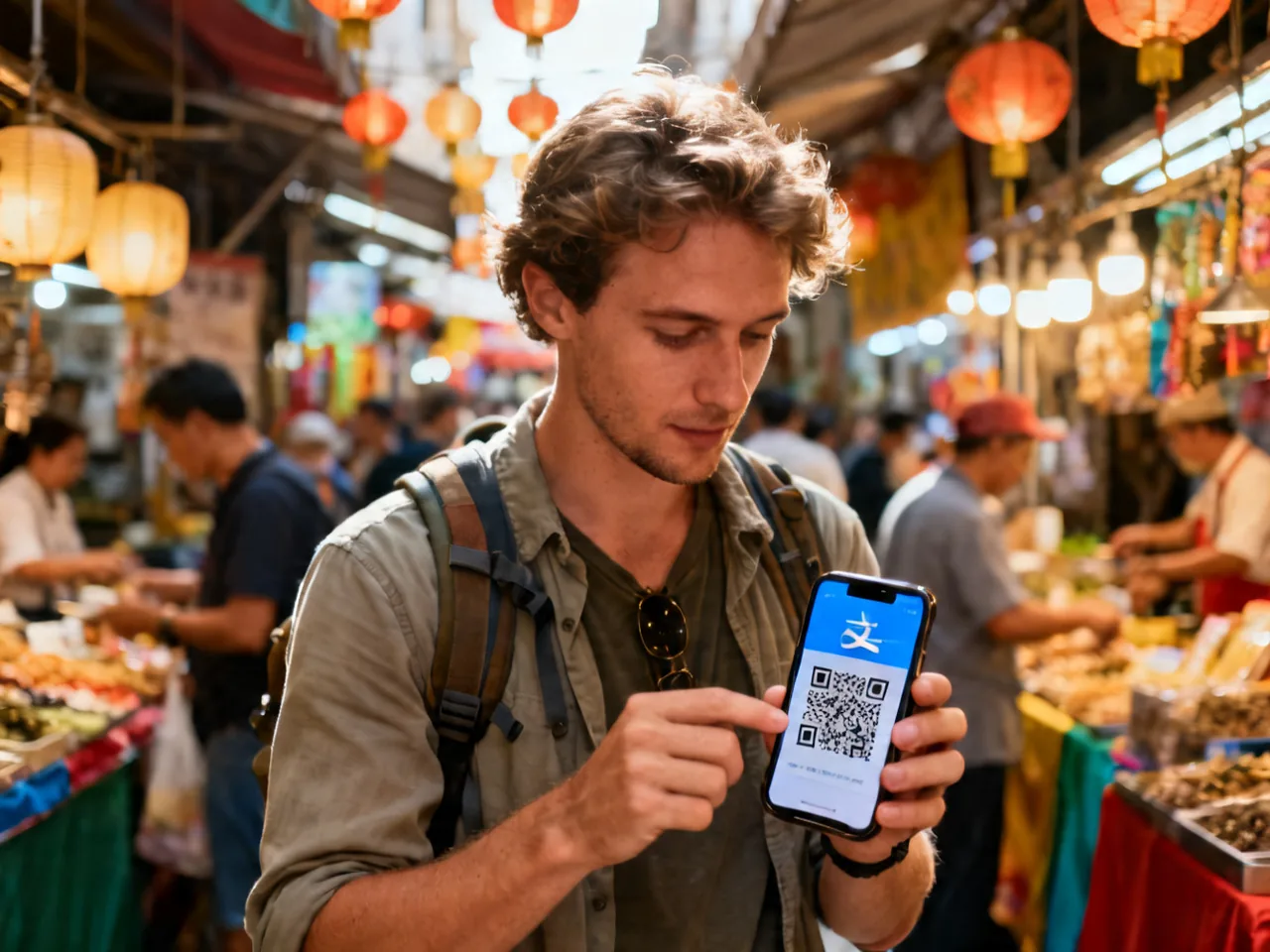
Not joking. Your phone is your map, taxi, wallet, translator, ticket booth, and hotel key all in one.
- Maps: Amap (高德地图) — far more accurate in China than Google Maps
- Rides: Didi
- Payments: Alipay
- Translation: Google Translate offline
- Train tickets: Trip.com
- Hotel access: many hotels use phone-based room keys
Dead phone = stranded. Carry a power bank. This isn’t a suggestion. China has a robust shared power bank rental system (scan to rent at any convenience store), but you need battery to scan.
You need a VPN for Google, Instagram, WhatsApp, YouTube. That’s just true.
But here’s what guides don’t tell you:
- Downloading a VPN inside China is hard. The App Store in China’s region doesn’t carry major VPN apps. Download and test yours before you leave home.
- VPNs aren’t 100% reliable. They get more unstable during sensitive periods — major holidays, political meetings.
- You might not need Google as much as you think. Amap beats Google Maps for China navigation. WeChat works for messaging locals. Trip.com replaces Booking.com.
The point: treat your VPN as a backup, not your primary tool. The apps that actually work well in China are Chinese apps.
Almost every foreign visitor who takes a Chinese high-speed train for the first time is stunned.
Beijing to Shanghai: 1,318 km, 4 hours 18 minutes, on-time rate above 95%. Cheaper than flying, no need to arrive two hours early, wider seats than a plane, you can walk around, buy hot food, and watch China’s plains, mountains, and city skylines pass outside the window.
Book on Trip.com (English interface, accepts foreign cards). Buy 3–7 days ahead — popular routes sell out.

Safety. China is very safe for tourists. Street crime rates are extremely low — pickpocketing is far less common than in popular European tourist cities. Walking alone at night in major cities, nobody will bother you.
Food hygiene. Street food doesn’t mean unsafe food. Food safety regulation in China has improved dramatically over the past decade. Use the crowd test — busy stalls with lines are generally safe.
Scams. People will try to sell you things. Someone might invite you to a “friend’s tea house.” These are recognizable and avoidable. Basic rule: if a stranger proactively approaches you and wants to take you somewhere, politely decline.
China is easier to travel than you expect, and more complex than you expect.
Easier, because the infrastructure is exceptional — transport, accommodation, payments, navigation, all more developed than most countries.
More complex, because it doesn’t map onto any other travel experience you’ve had. Japan experience doesn’t transfer here. Thailand experience doesn’t either. China has its own logic, and you need to use Chinese tools and Chinese methods to navigate it.
Get the basics right. Then let curiosity take over.
📖 Related Articles:
- Complete China Visa Application Guide
- Chinglish That Makes Foreigners Laugh Till They Cry
- China Travel Budget Planning Guide
- Chinese Currency and Payment
- Face, Guanxi & Renqing: Three Keys to Understanding Chinese Society