What Misleads Most at Night in Suzhou Is Not Direction but the Quiet Ease It Seems to Promise
Many first-time visitors to China find Suzhou light during the day: the bridges are low, the lanes are narrow, the water is calm, and the whole city seems to know how to keep its voice down. At night, however, that same lightness and quietness can create a misleading impression—that the route must therefore be simple, and that following the canal automatically guarantees an easy line. What deserves emphasis at night is not don’t go out, but do not confuse quiet with a lack of structure. Waterside lanes, little bridges, turns, and dimmer corners all make orientation depend more strongly on judgment than they do in daylight.
For Travel Notes, this kind of subject is especially suitable for a slow-route reported format. Suzhou at night does not need to be made frightening, but it should not be written vaguely either. The useful layer is to show readers how to preserve route awareness without damaging the city’s gentleness. In other words, this is not an article saying do not go out at night. It is an article about how to walk at night without mistaking lightness for looseness.
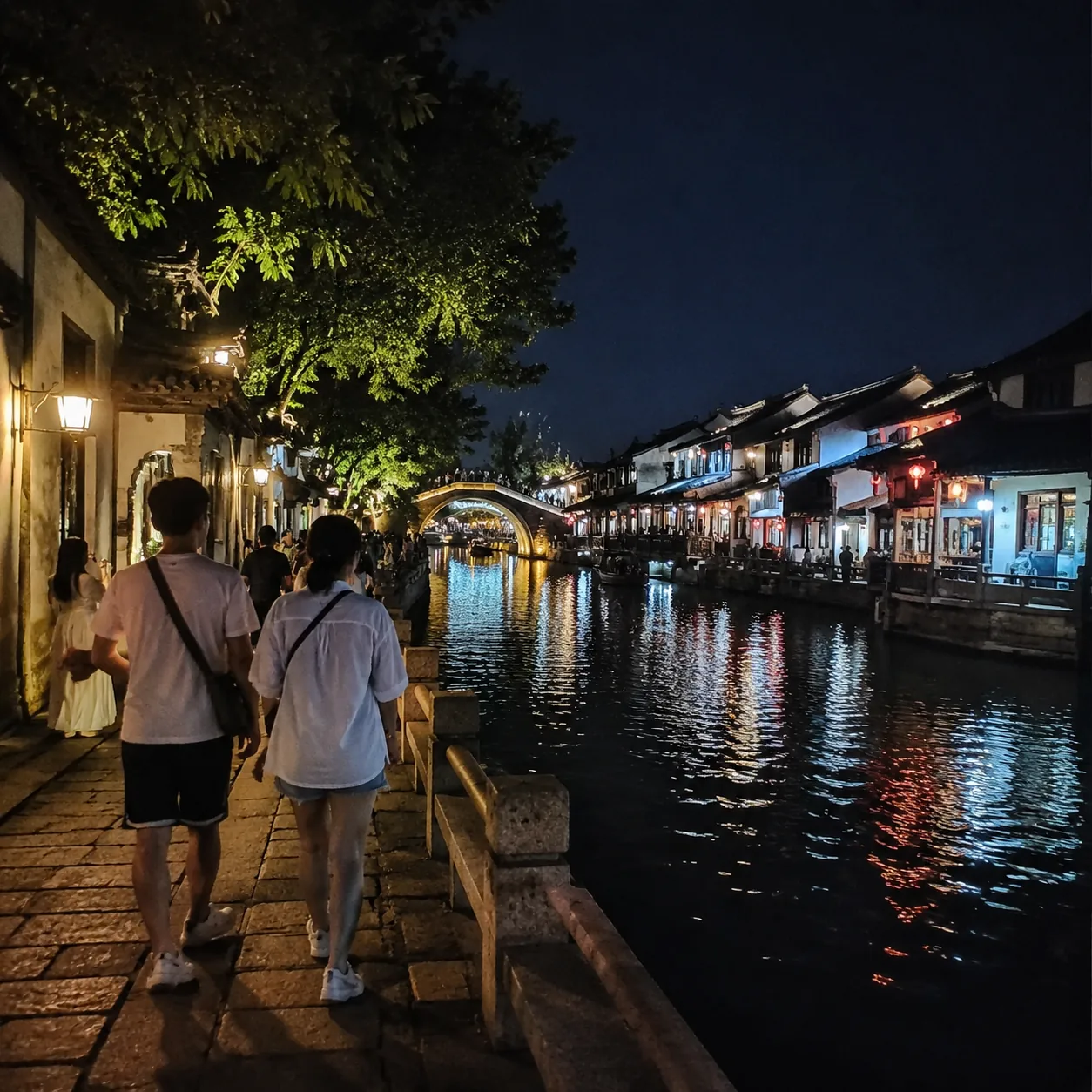
In Suzhou at Night, the First Thing to Read Is Not the View, but the Boundary
In daylight, Suzhou first presents water and walls. At night, what should be noticed first is boundary. Which segment has reliable lighting, where the lamps thin out, after which bridge the pedestrian flow suddenly falls, and which beautiful canal stretch should not be pursued too far alone. Many people move smoothly through the city by day and then instinctively feel that they already know the place by evening. But a smaller city at night is rarely stabilized by familiarity alone. It is stabilized by confirming boundaries again.
A Good Night Route Is Not the One That Goes Furthest, but the One That Stops in the Right Place
At night Suzhou easily tempts the traveler into excess. Quietness, water sound, and reflected light create the feeling that a little more walking should always still be fine. But a stable night route is usually built not through distance, but through stopping well. When should one return to a brighter main line? When should a hot drink or one quiet meal close the route properly? When is one stretch of reflected canal already enough? These judgments decide whether the traveler leaves with aftertaste or with pointless fatigue from wandering.
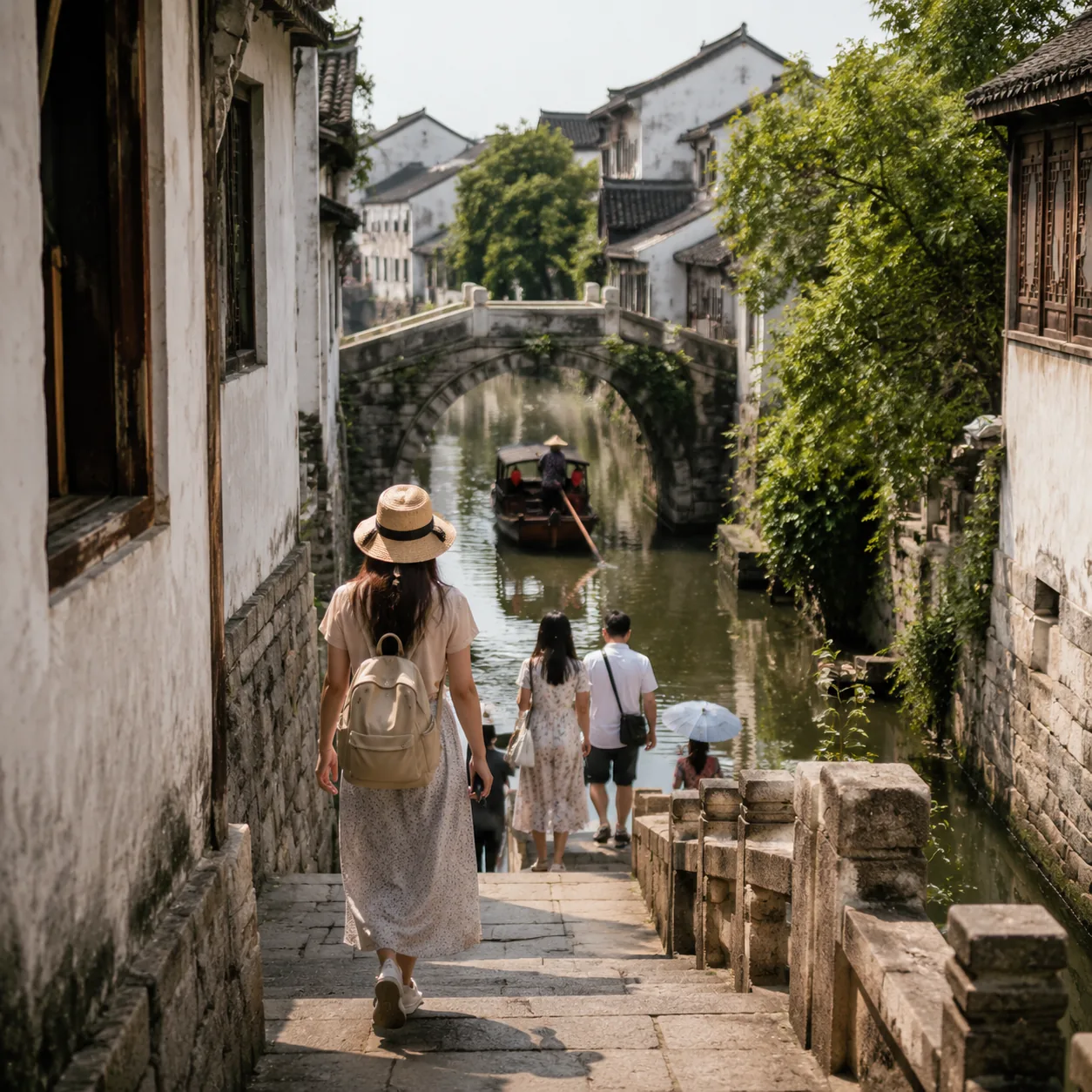
What Suzhou at Night Ultimately Teaches Is That Lightness Does Not Mean Diffusion
By day, Suzhou teaches the eye to slow down. By night, it teaches that same slowness to hold its shape. A mature method of entry does not mean noticing detail by day and then surrendering entirely to feeling at night. It means that the same detail judgment continues to work after dark: reading the lights, the bridges, the people, and which parts of the city are still speaking through movement while others have fallen into near-solitude. As long as that line of judgment remains active, Suzhou at night is not only gentle. It is also stable.
The Best Night Judgment Is Often the Sense That This Is Exactly the Right Moment to Turn Back
Many travelers treat one more stretch of walking as proof of commitment. In Suzhou at night, however, the most mature form of commitment is sometimes knowing exactly when to head back. Not out of fear, but because the city’s most valuable night beauty is often already sufficient. If the traveler stops at the best reflection, the right breeze, and the right degree of quiet, the route may feel more complete than if it kept chasing one more bridge. For a first-time visitor to China, this judgment of enough is often more valuable than another kilometer.
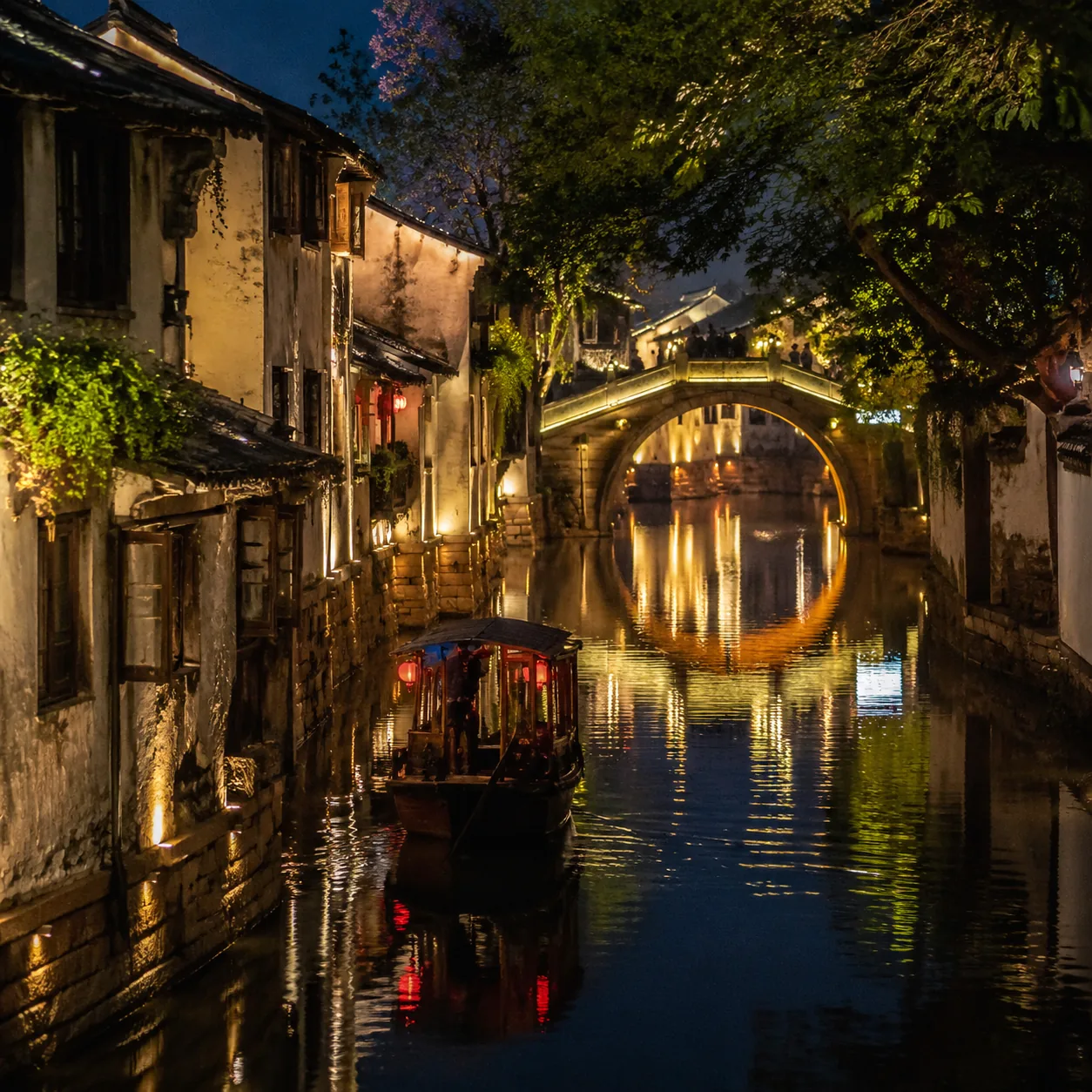
A Stable Night Route Always Leaves One Deliberate Return Segment
Many travelers treat retracing one’s steps as wasted motion. In Suzhou at night, however, the return path is often part of what makes the route work. A bridge crossed in daylight becomes another experience when seen from the other side after dark. A canal-side line walked at dusk may feel newly read on the way back because the light and people have changed. In Suzhou at night, newer is not always better. Familiarity, when used lightly, often produces steadiness.
A Night Route Must Preserve Not Only the View, but Also the Next Day’s Energy
If one becomes too greedy in Suzhou at night, what is most easily lost is not the night itself, but the next day. A traveler may squeeze in one more bridge and one more lane, yet the eye and the legs will move more heavily the next morning. The mature judgment is to let the night end while it is still whole, rather than chasing it until the body falls apart first. That way, the city continues to work the next day instead of surviving only in photographs.